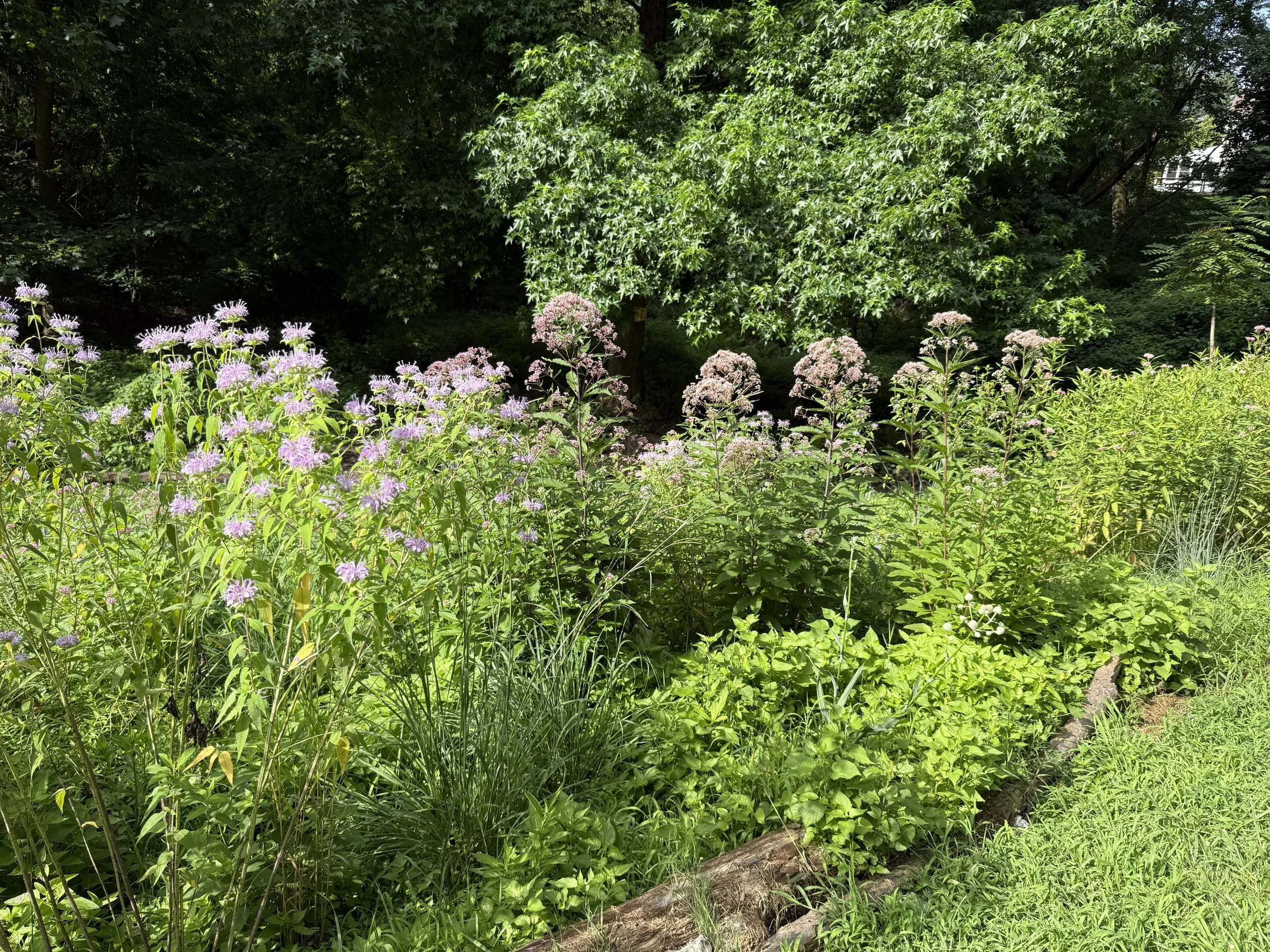
Navajo St. Meadow
A brief story of our work
Our second native meadow revitalization effort in the area begun at a half-acre triangle of mostly unused lawn grass and invasive vines at the interesction of Cresheim Valley Drive and Navajo St. We reached out to Friends of Wissahickon and drafted a restoration management plan for what we would do in the coming years at the site.
In November 2023, we took out our first area of grass at the site and seeded it with a diverse variety of native meadow wildflowers and grasses. The following spring, we supplemented the germinating seeds with planted plugs and nursery-bought plants. Over the next two years, we gradually expanded our planted area by taking out more grass each season and doing a mixture of seeding and planting. By summer of 2025, our meadow was flowering gloriously. We have had incredible success at attracting pollinators, supporting every stage of the monarch butterfly’s life cycle and providing food and habitat for many species of solitary bees.
In addition to the meadow, we have expanded our work by restoring the wooded lowland habitat at the back of the site. We are currently in the process of removing invasive privet, Japanese honeysuckle, and oriental bittersweet and replanting with native ferns, irises, and other wet-tolerant native understory plants. This winter, we are planting a hedgerow of native trees and shrubs along Navajo St. that provide fruits and berries for birds, wildlife, and humans. We have also cleaned up a substantial amount of trash that was dumped along Navajo St., turning it into a community nature oasis rather than a trash dump.
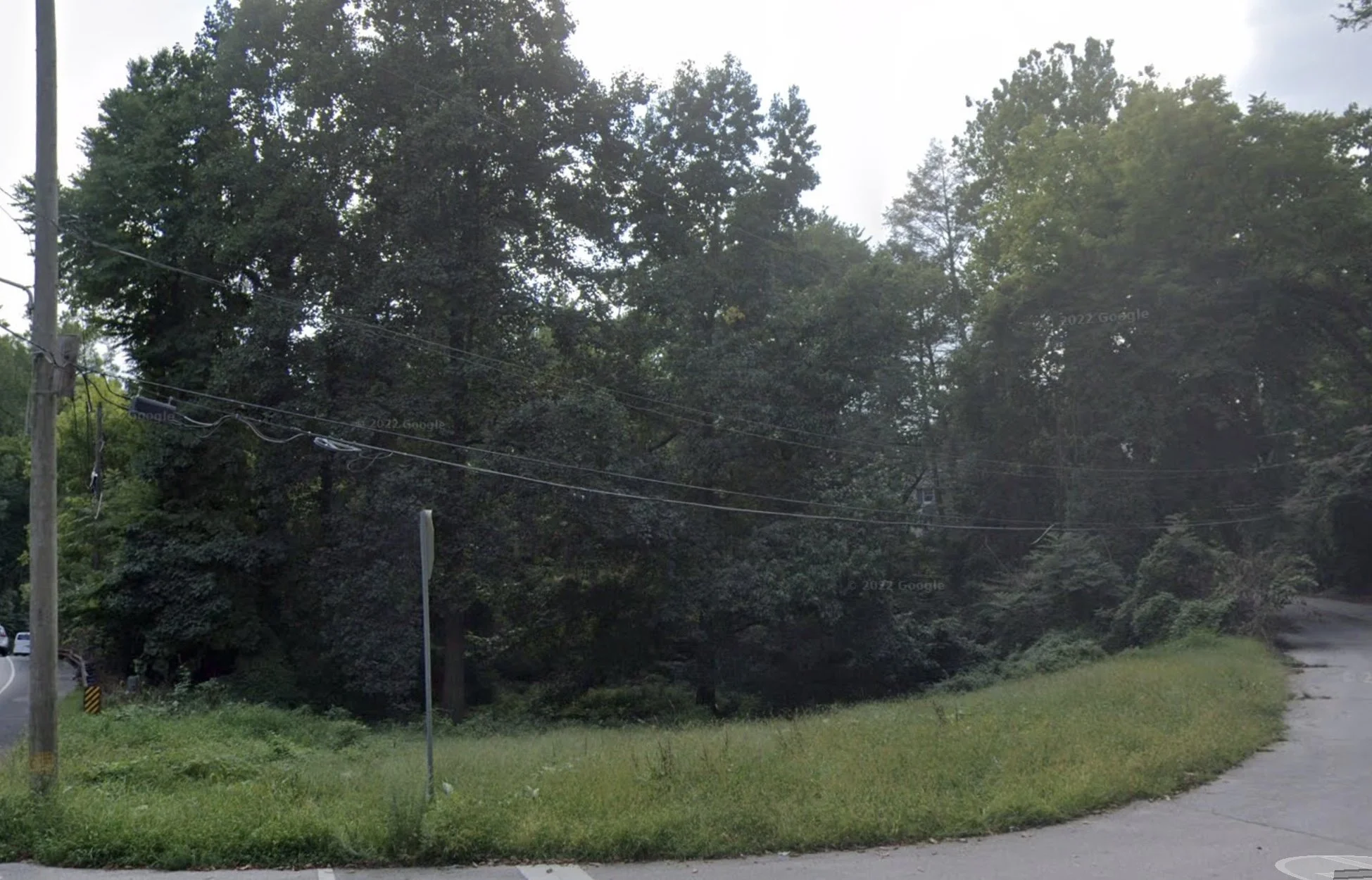
Google Maps photo of the site, taken prior to our plantings in 2022
Our habitats: Meadow
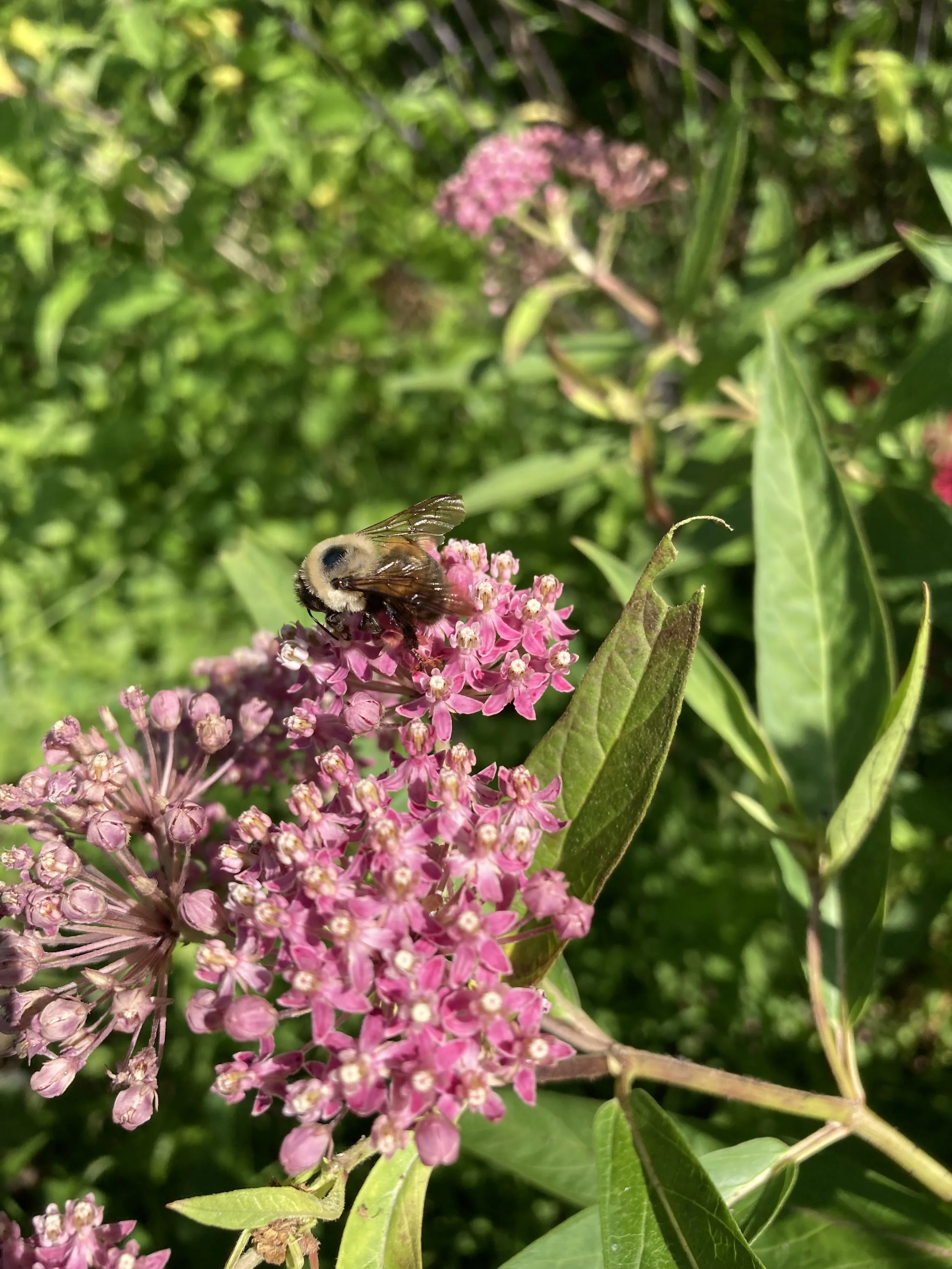
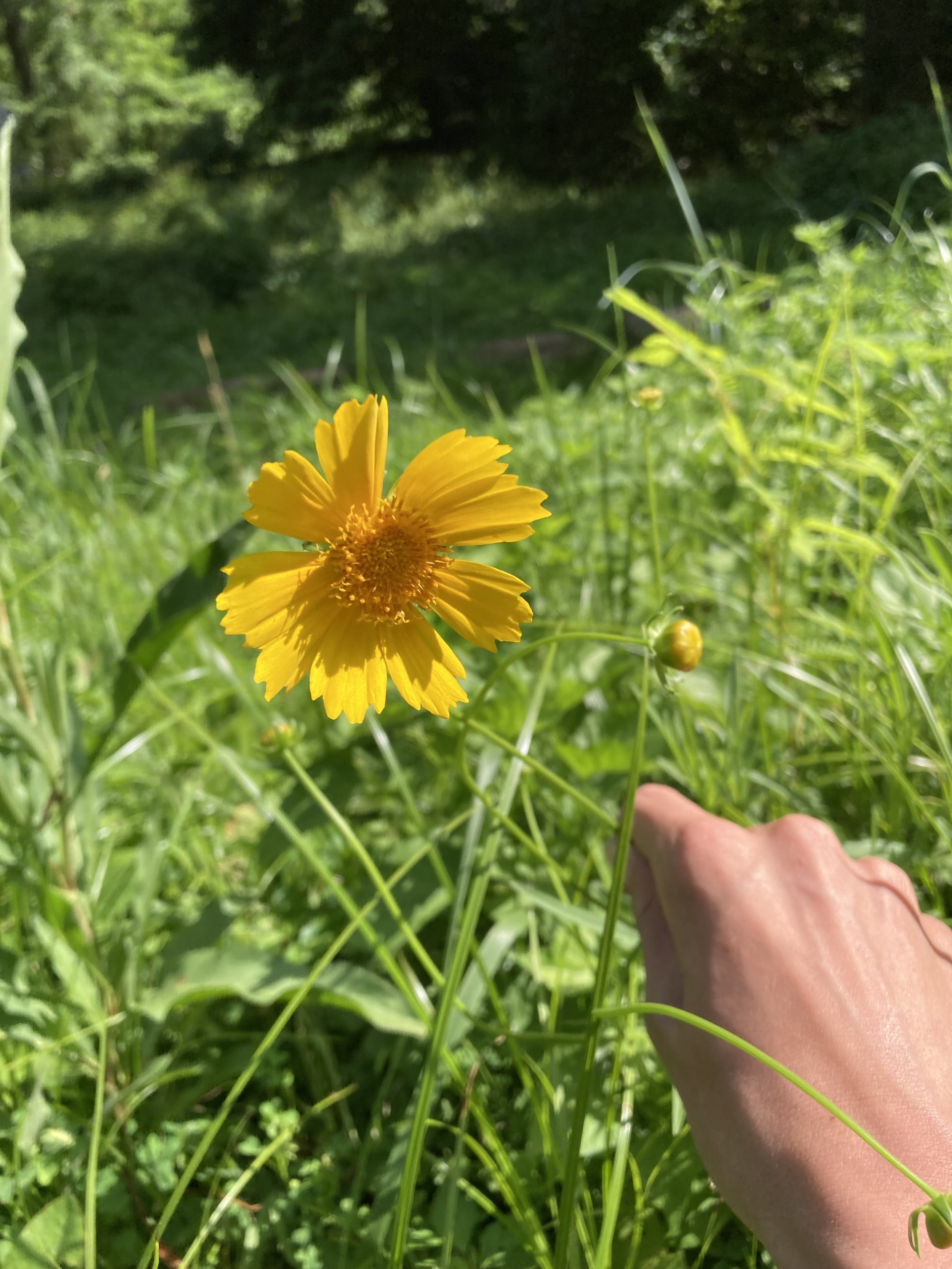
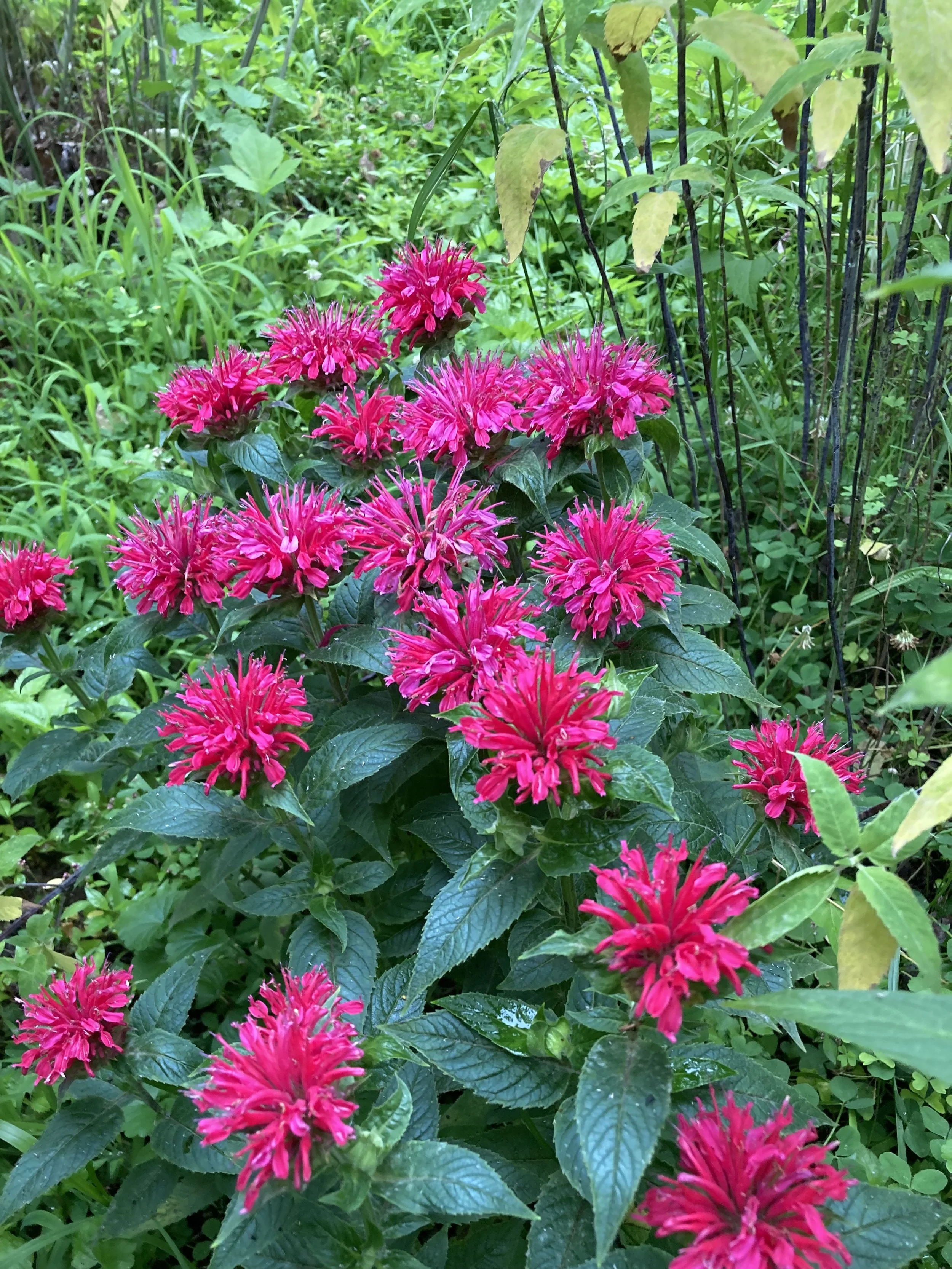
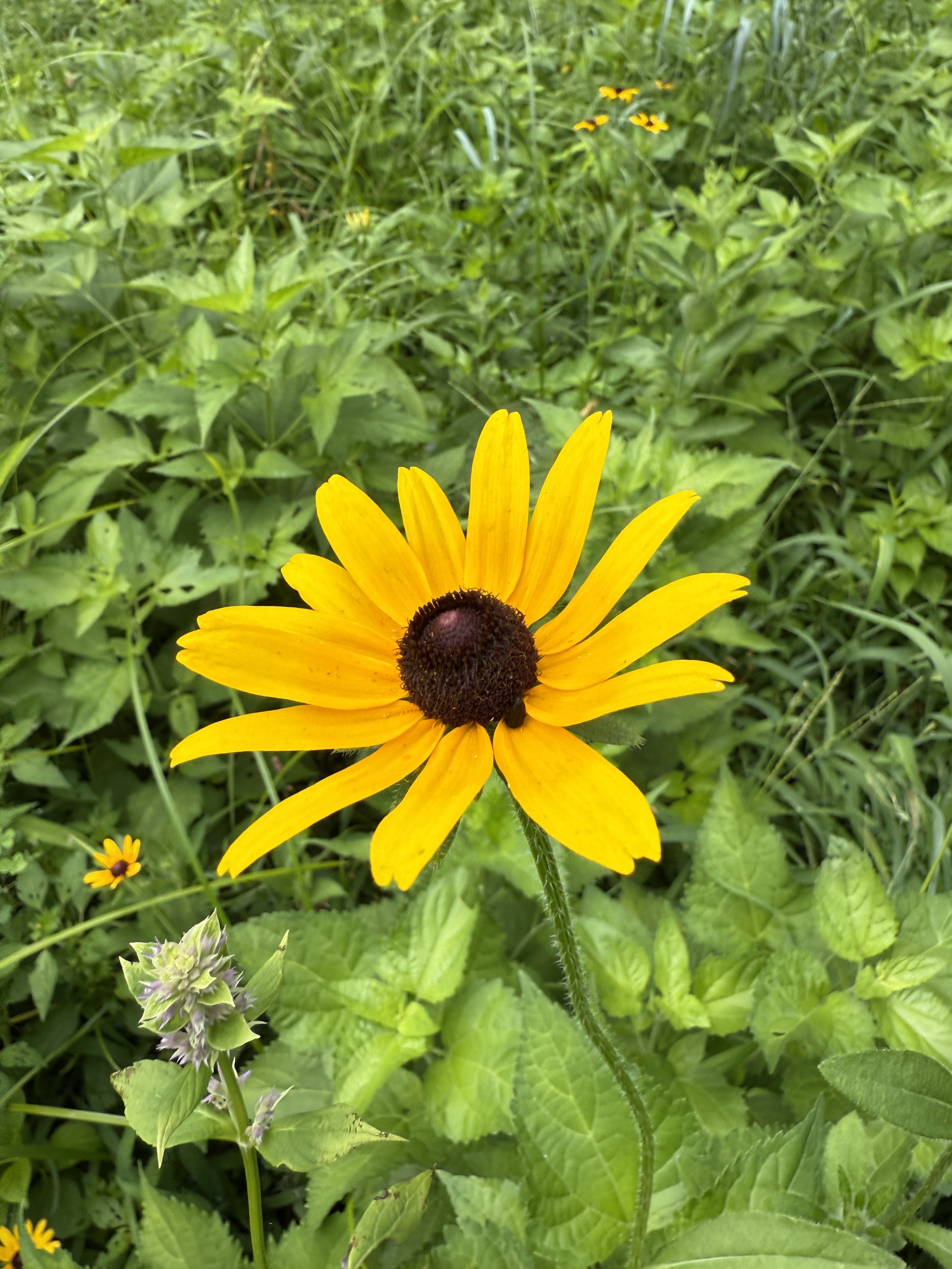
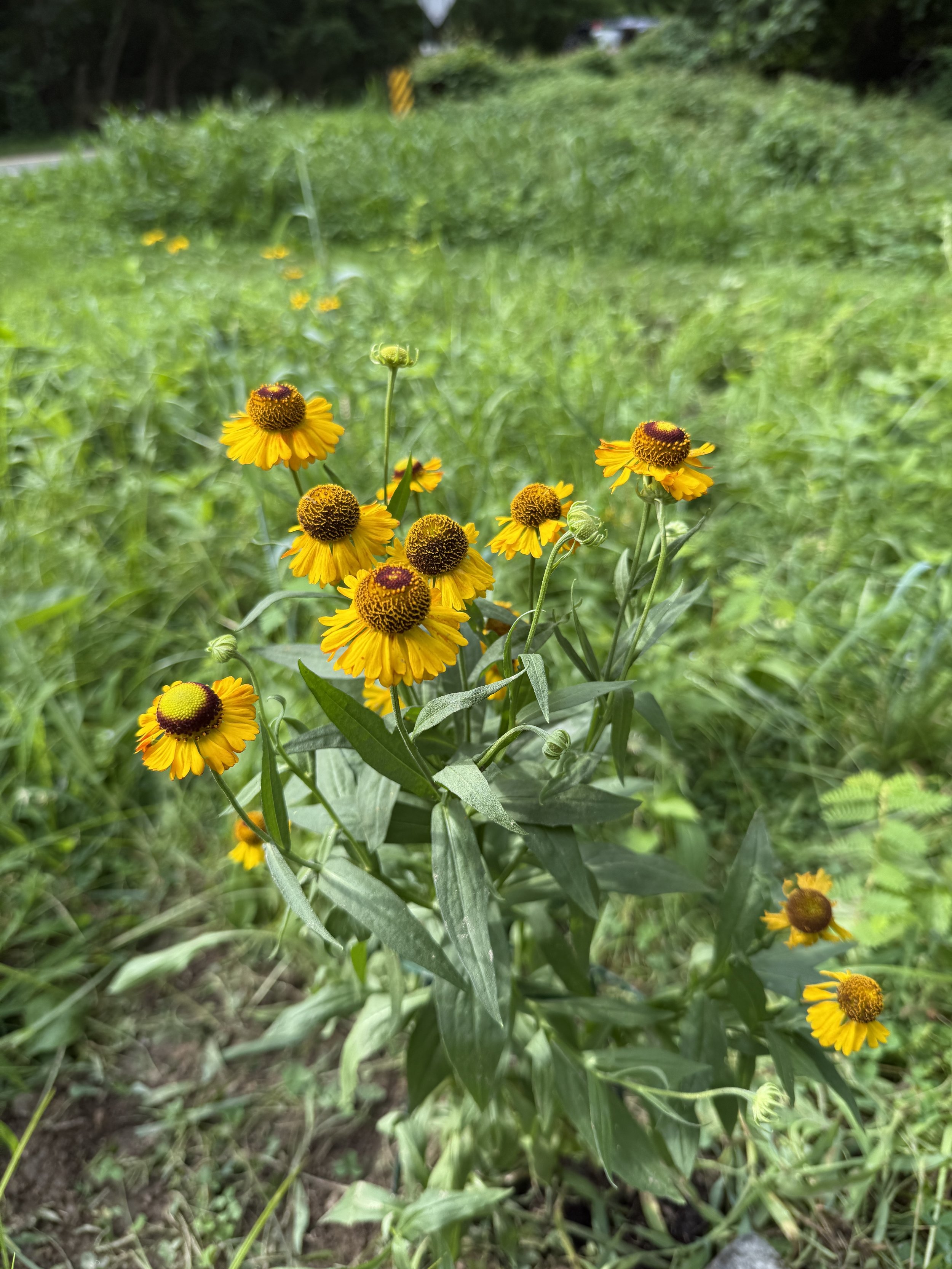
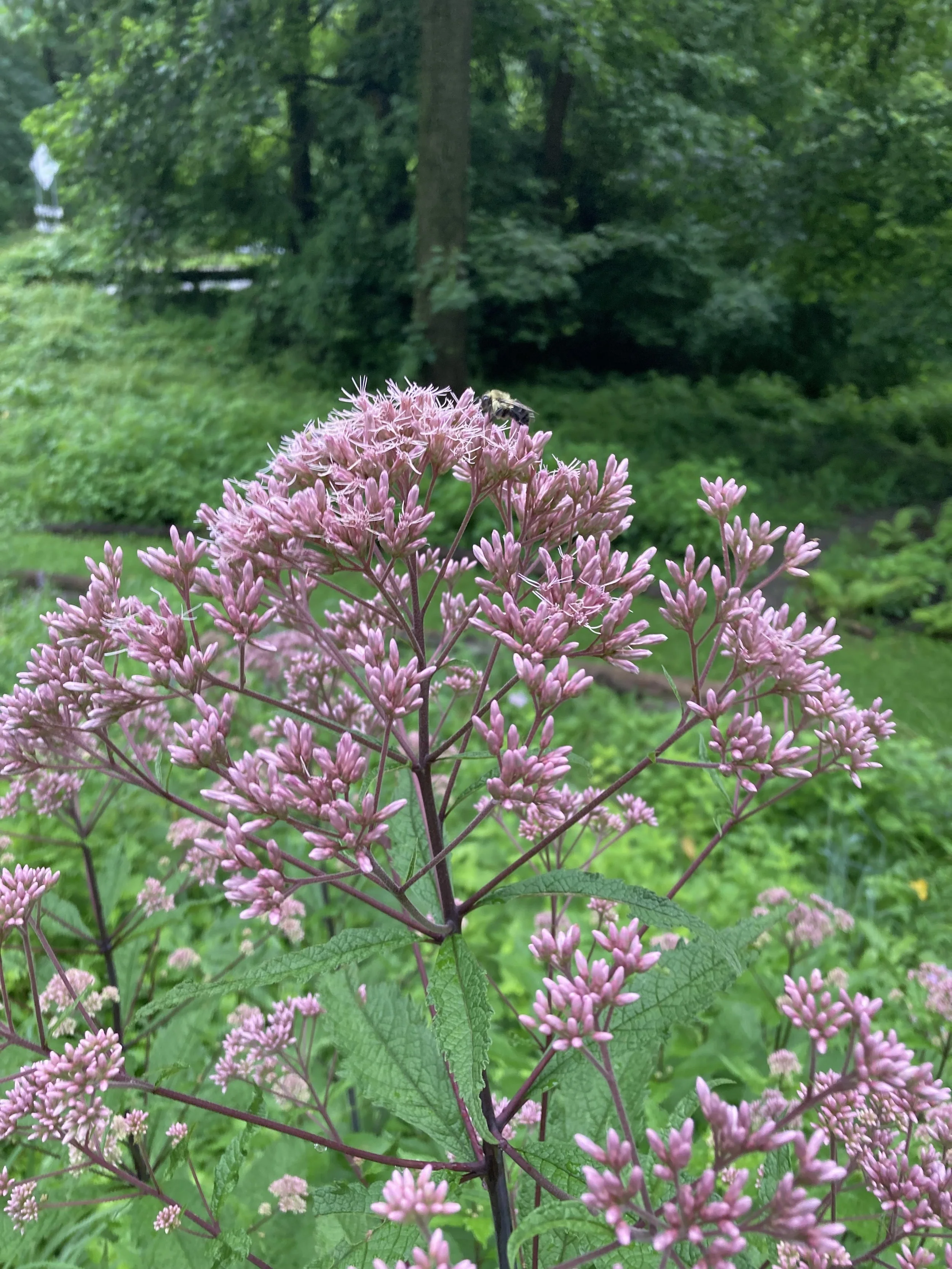
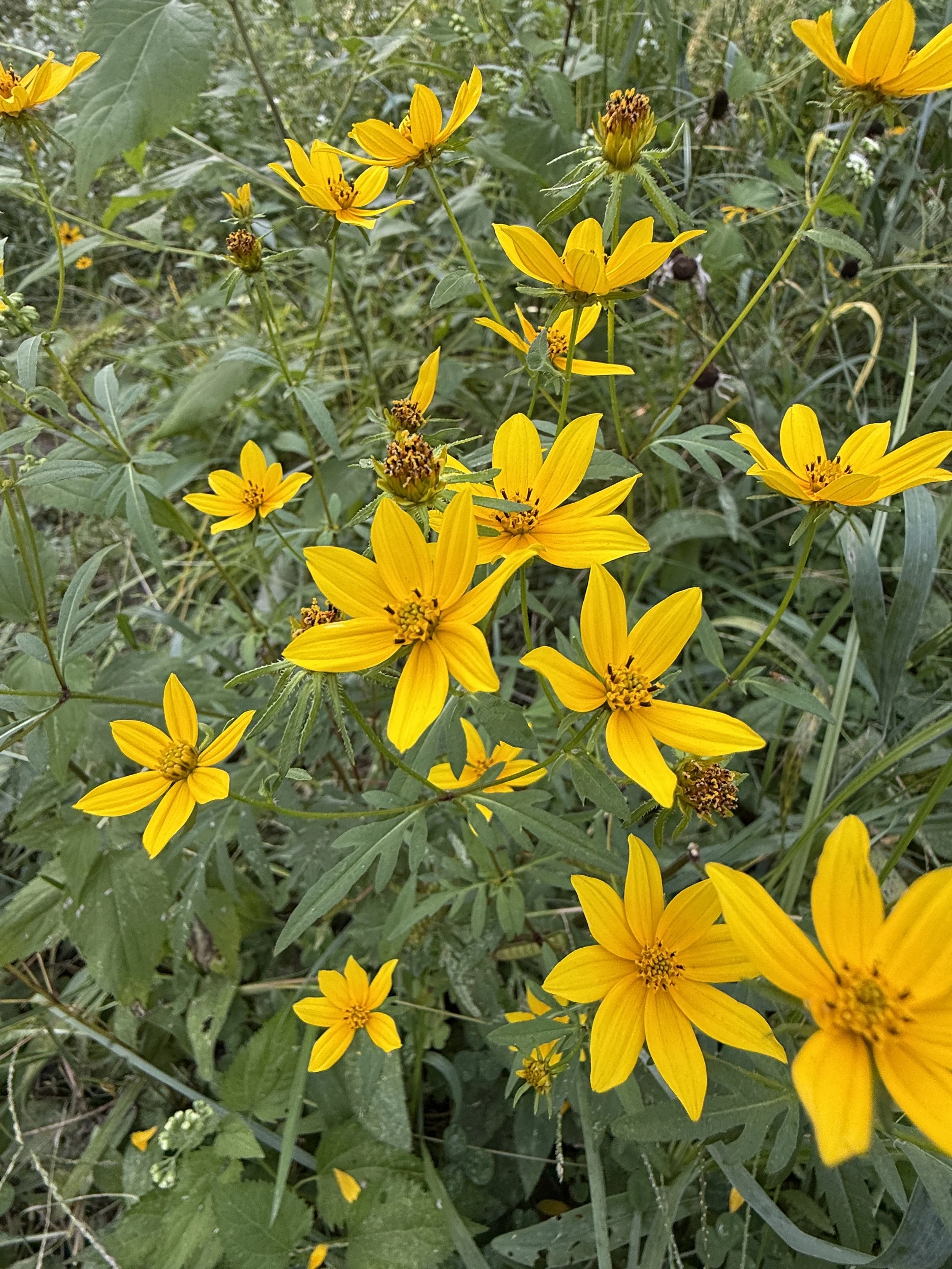
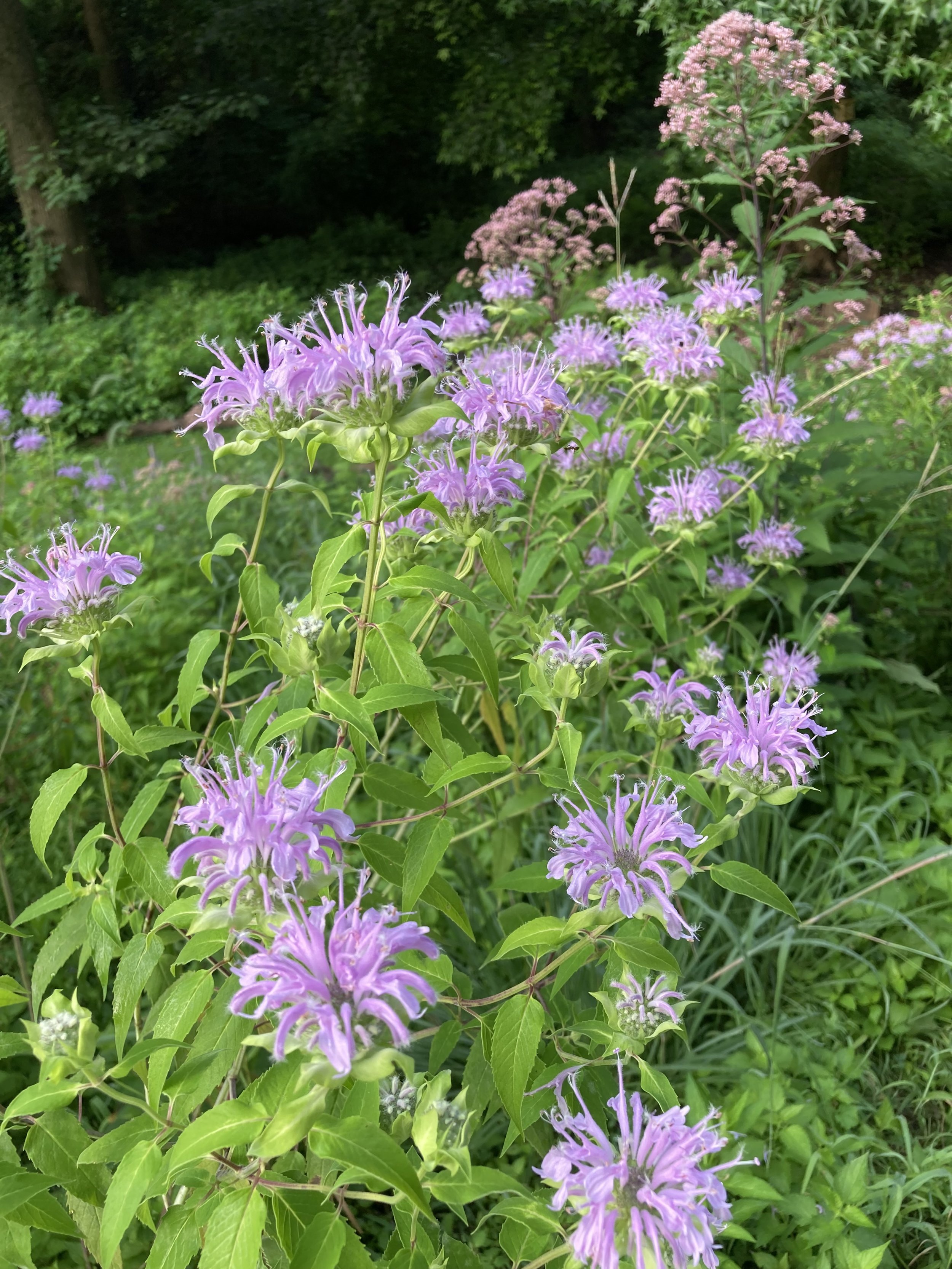
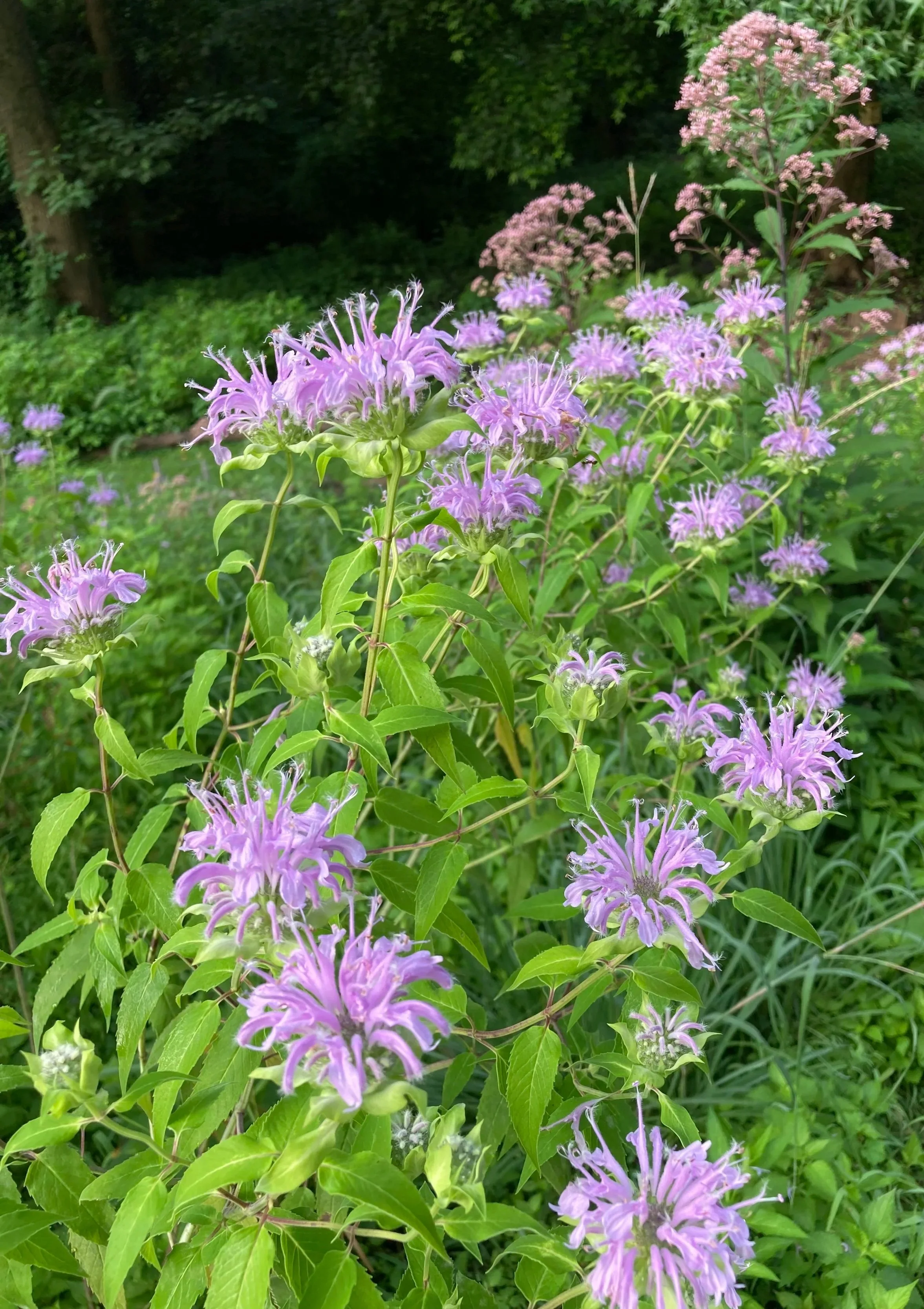
Like at Buttercup Cottage, we work to foster several different microhabitats at our plot on Navajo St. to benefit biodiversity. Our most prominent habitat at the site is the bordered native meadow in the open area between Navajo St. and Cresheim Valley Dr. The meadow has been planted with a diverse variety of native wildflowers and grasses, including wild bergamot, swamp milkweed, black-eyed susan, joe-pye weed, lanceleaf coreopsis, Canada wild rye, and little bluestem. The densely planted meadow habitat is an important habitat for butterflies, bumblebees, solitary bees, hummingbirds, and migrating warblers.
We have currently been expanding our meadow habitat by taking out and replanting a strip of grass along Navajo St. and converting a small stretch of invasive Japanese knotweed along Cresheim Valley Dr. into a patch of native wet-loving wildflowers with a stone dry streambed to guide stormwater.
At the left-hand corner of the meadow we have a large bee house that is currently home to over a dozen nesting and hibernating solitary mason bees and native wasps. Mason bees are some of the fastest declining insects, but every plot of new habitat matters.
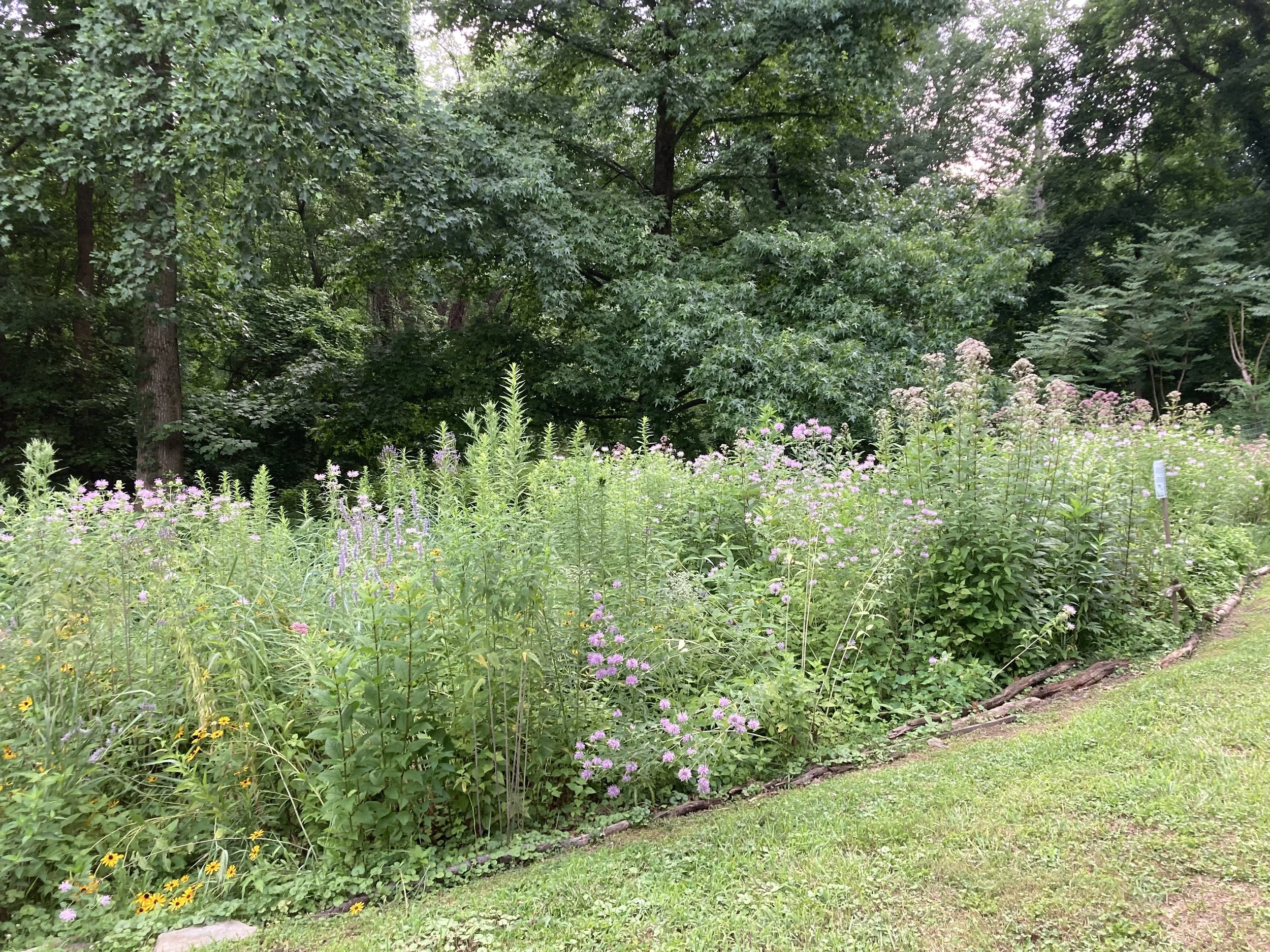
Our meadow in full bloom, July 2026
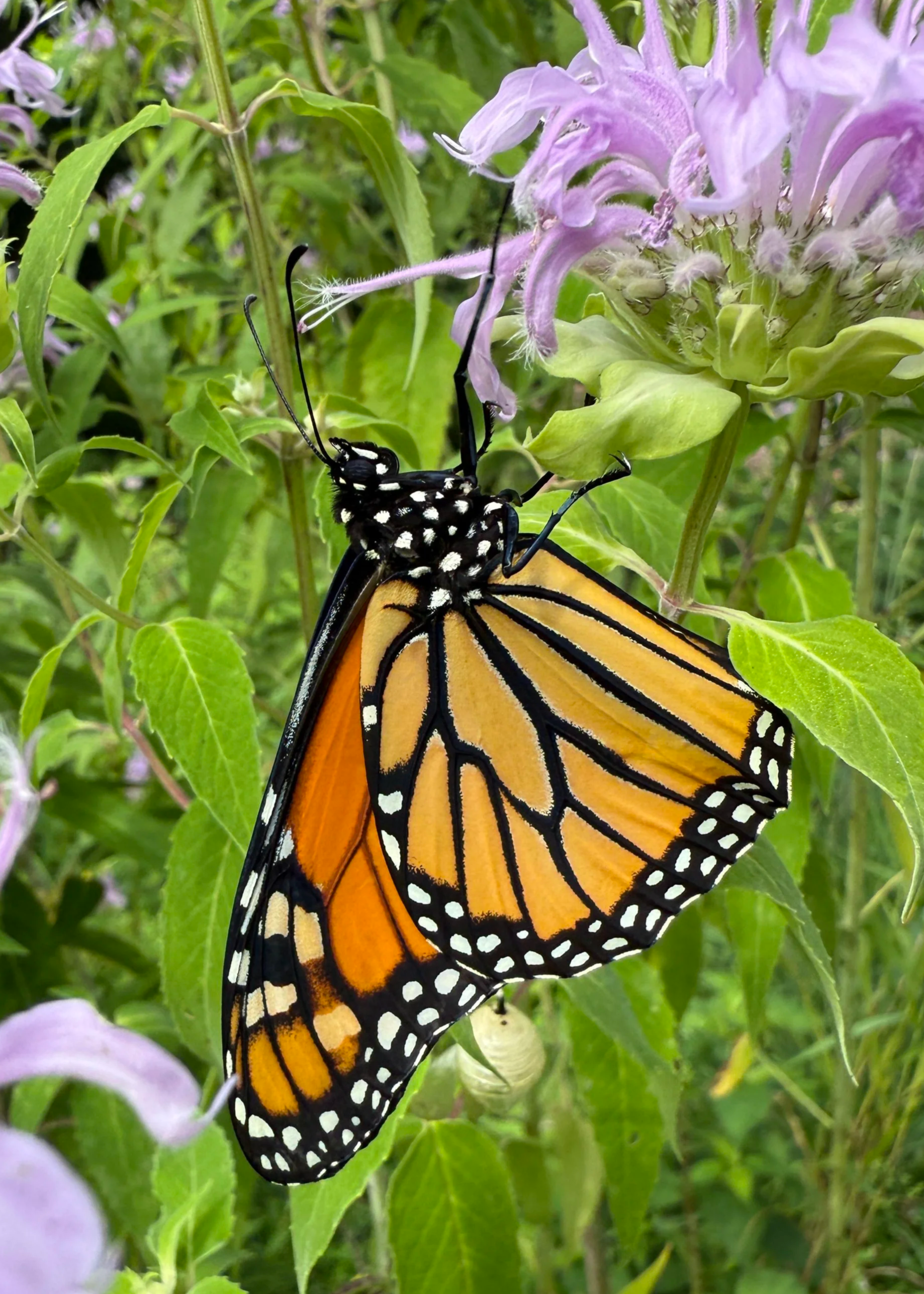
Supporting monarchs
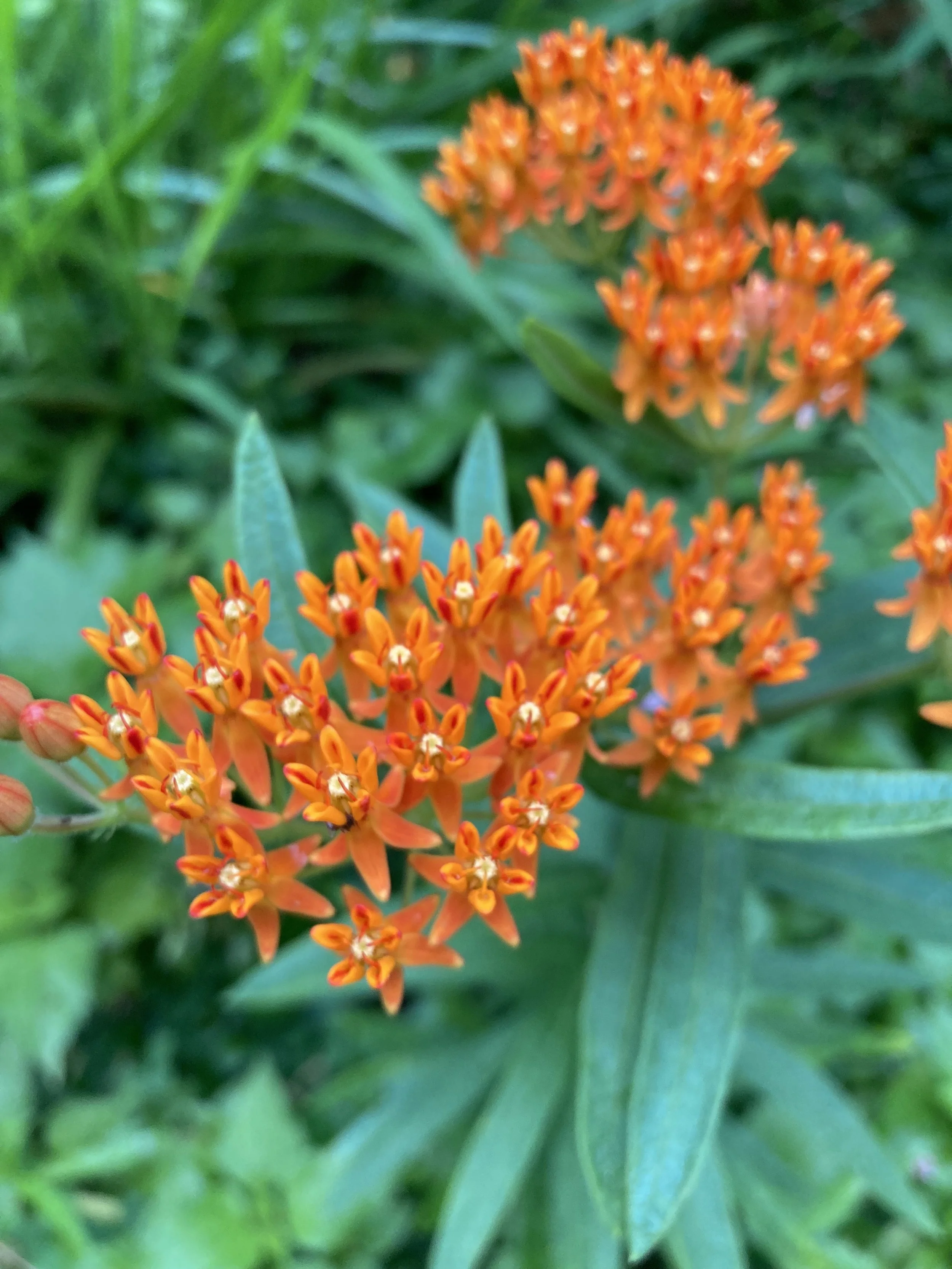
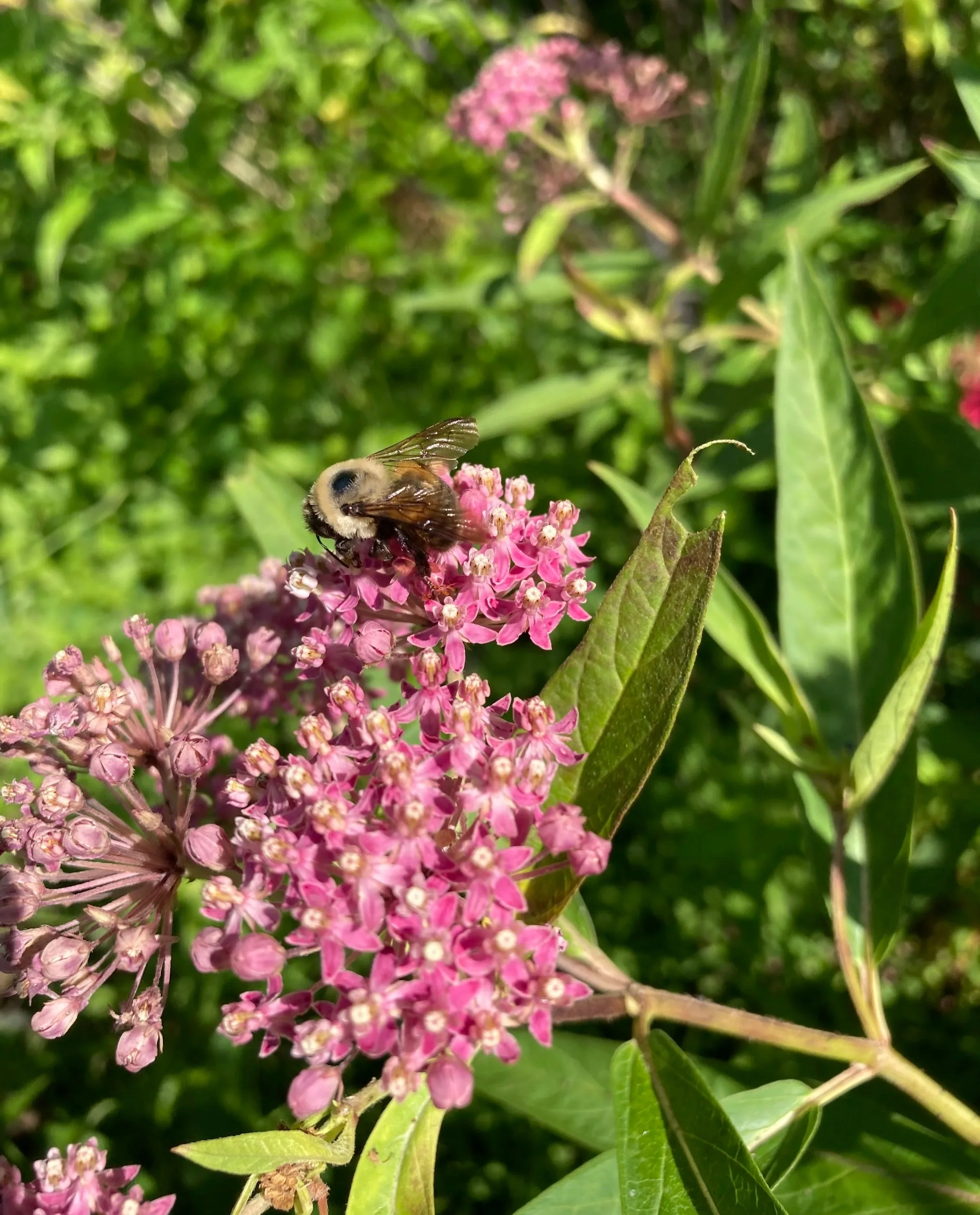
The pocket meadow at Navajo St. supports all stages of the monarch butterfly’s life cycle and is a waystation for migrating monarchs from June to October. Milkweed is the only plant that monarchs lay their eggs on and that caterpillars will eat. Our meadow has three species of native milkweeds (swamp milkweed is our most abundant one here), supporting a breeding population of monarchs all summer long. Last July, we were fortunate to witness a monarch emerging from its chrysalis here — a rare and incredible event to see in nature. In addition, our fall blooming native flowers are an important nectar source for monarchs on their way to Mexico.
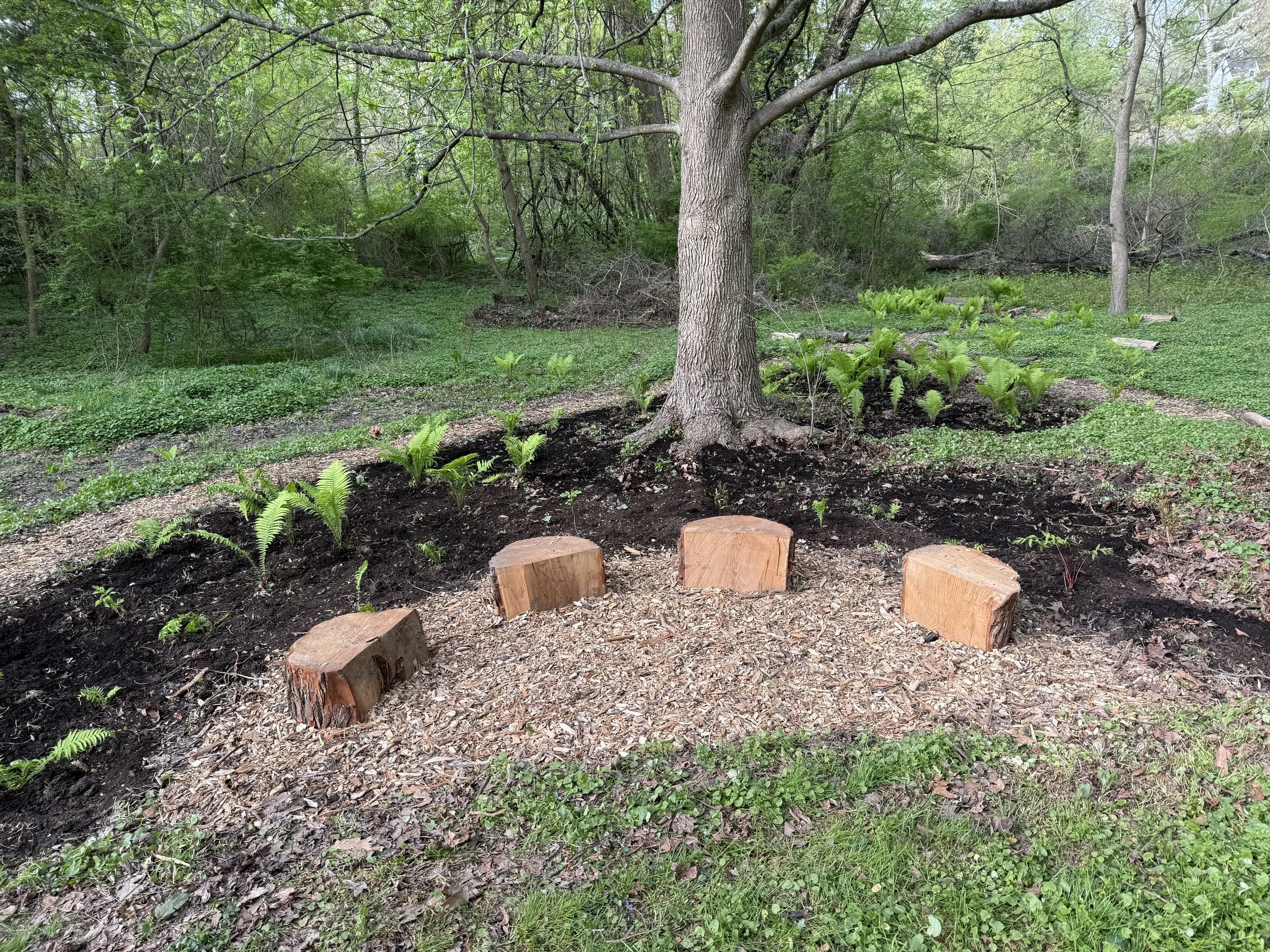
Woodland habitat
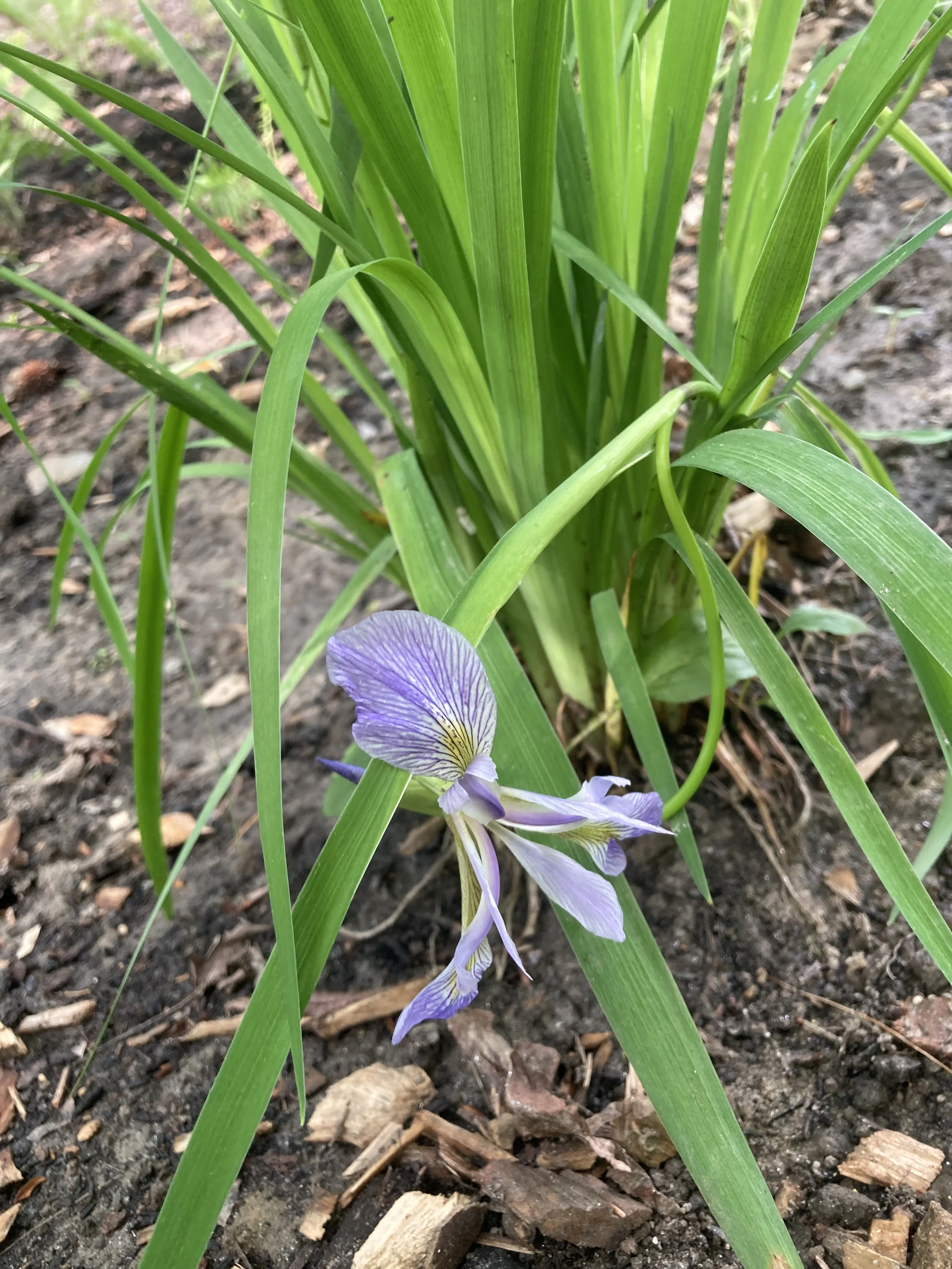
Down below the meadow, we are planting and restoring the woodland habitat, which slopes back and eventually hits a steep drop down to Cresheim Creek. In this pocket section of woodland, we have some noteworthy trees, including a stately American sweetgum visible from Navajo St. and a large silver maple further back, which is likely a couple centuries old. We have been replanting the understory and forest floor with native herbaceous plants like ostrich ferns, irises, and spring ephemerals, and also adding more native trees and shrubs to benefit wildlife, such as spicebush and box elder. Right below the meadow we have installed a mulched sitting area with a ring of stumps to encourage visitors. In addition, we have restored a small vernal pool at the far back of the site where rainwater naturally collects. While the pool is dry much of the time, it stays mostly full for many days after a rainfall, providing needed water for wildlife. We have planted a variety of native wet-loving plants around the pool, including ostrich ferns, sensitive ferns, blue flag iris, and jewelweed, to create an enticing space for nature and wildlife.
Plants & Wildlife
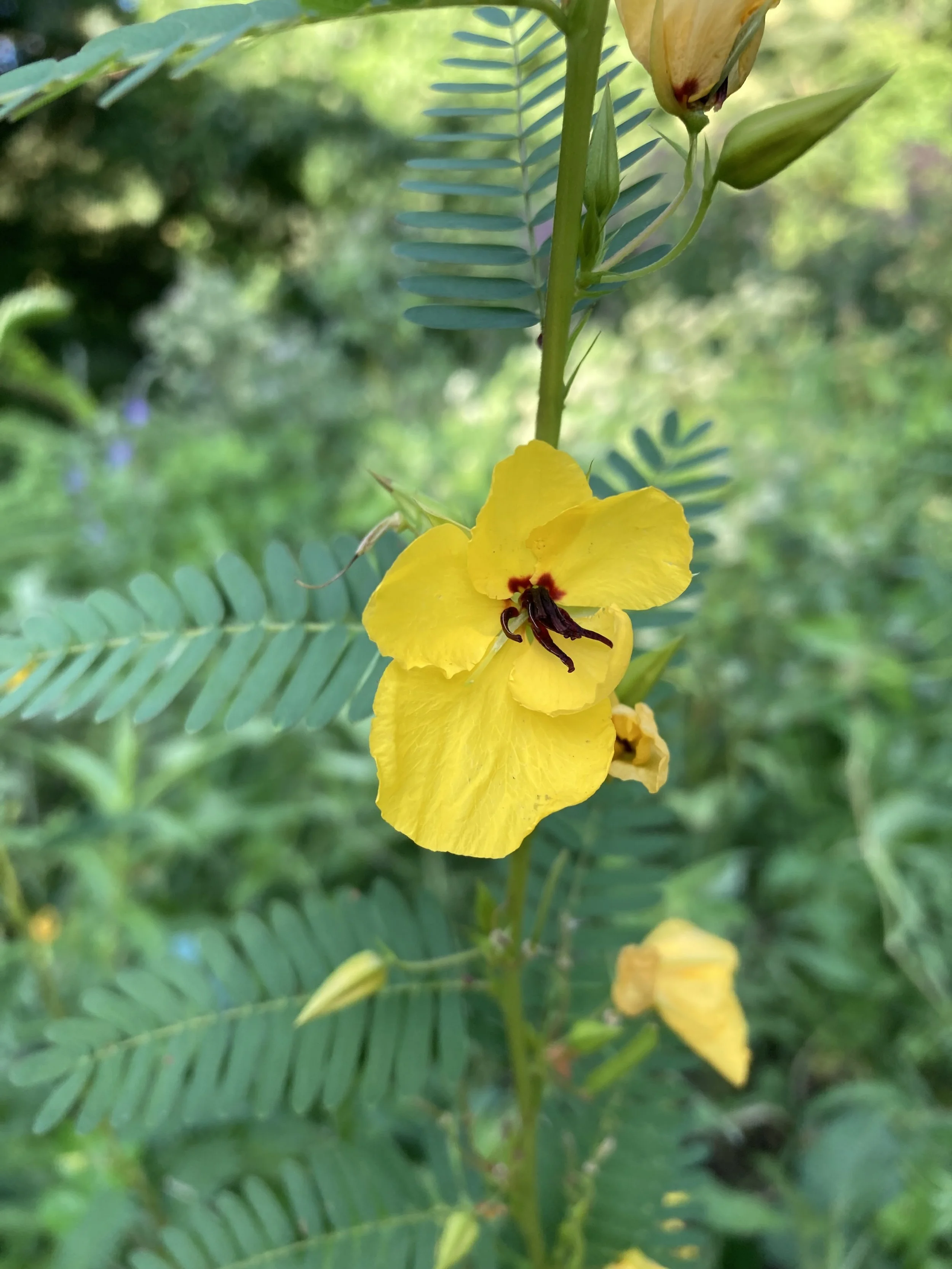
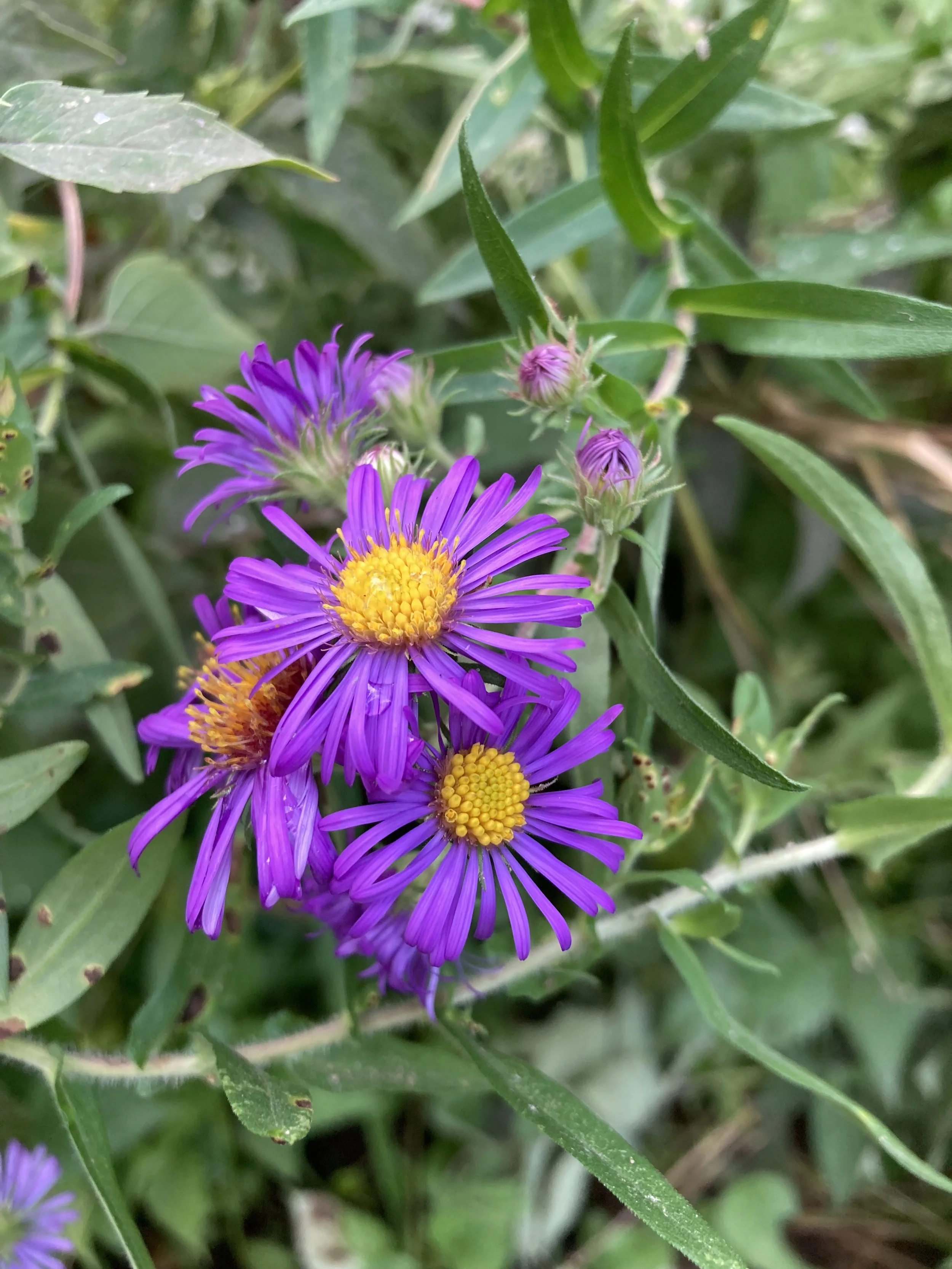
We currently have planted and foster 75 species of native plants in our plot on Navajo St., from meadow wildflowers like bee balm, swamp milkweed, and black-eyed susans to sweetgums, spicebush, viburnums, and ostrich ferns.
We have also had incredible success at bringing back pollinators and wildlife to Navajo St. Our native plantings have attracted multiple species of butterflies (including lots of monarchs), multiple species of native bees, five of our native mammals, and nearly 40 species of birds, from yellowthroat warblers and song sparrows to American goldfinches and ruby-throated hummingbirds. For a complete list of the plants and wildlife at our Navajo St. meadow and woodland, click on the links below:
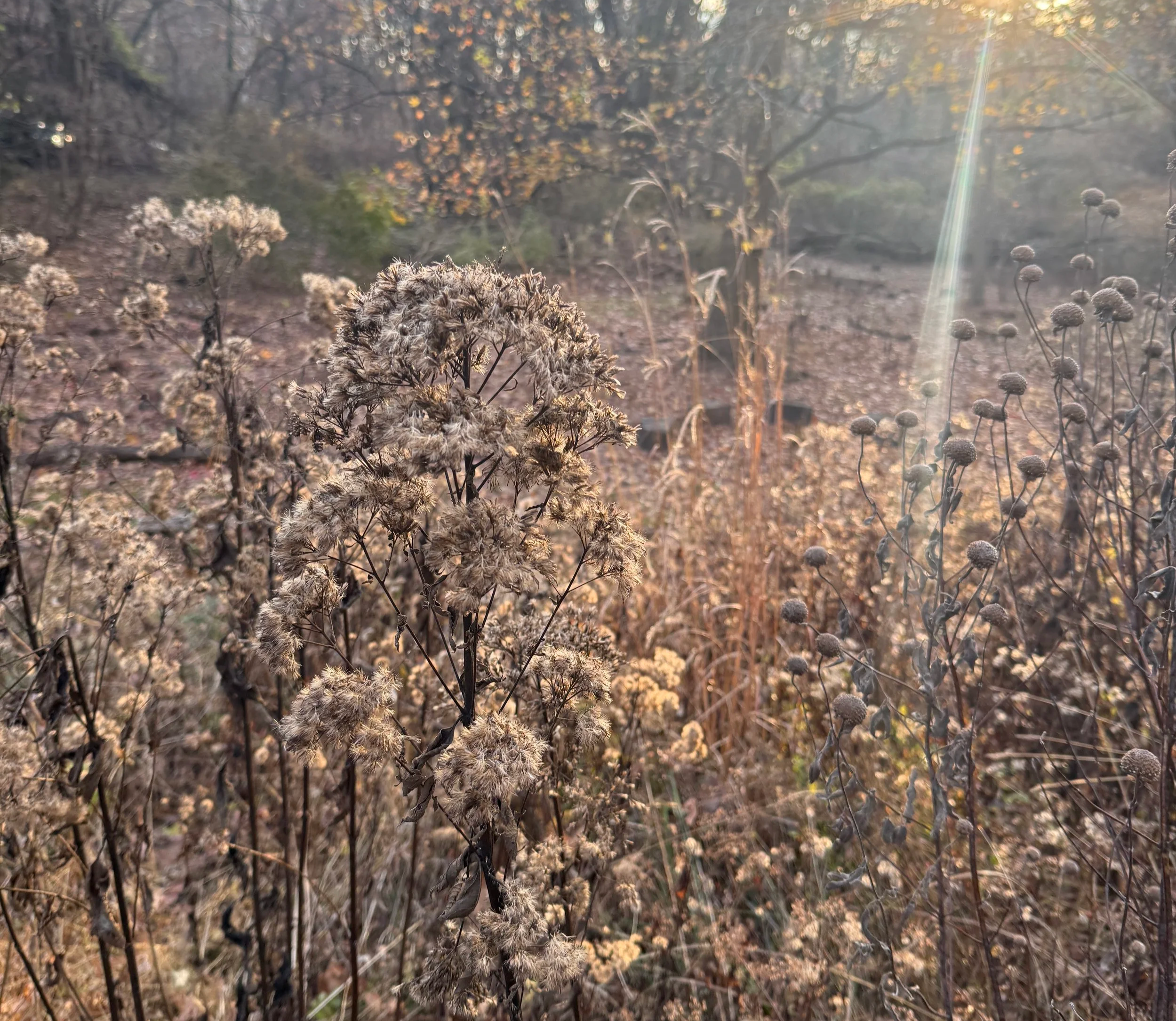
Selection of blooms
Click through to see what is in bloom at our Navajo St. meadow!