Buttercup Cottage
A brief story of our work
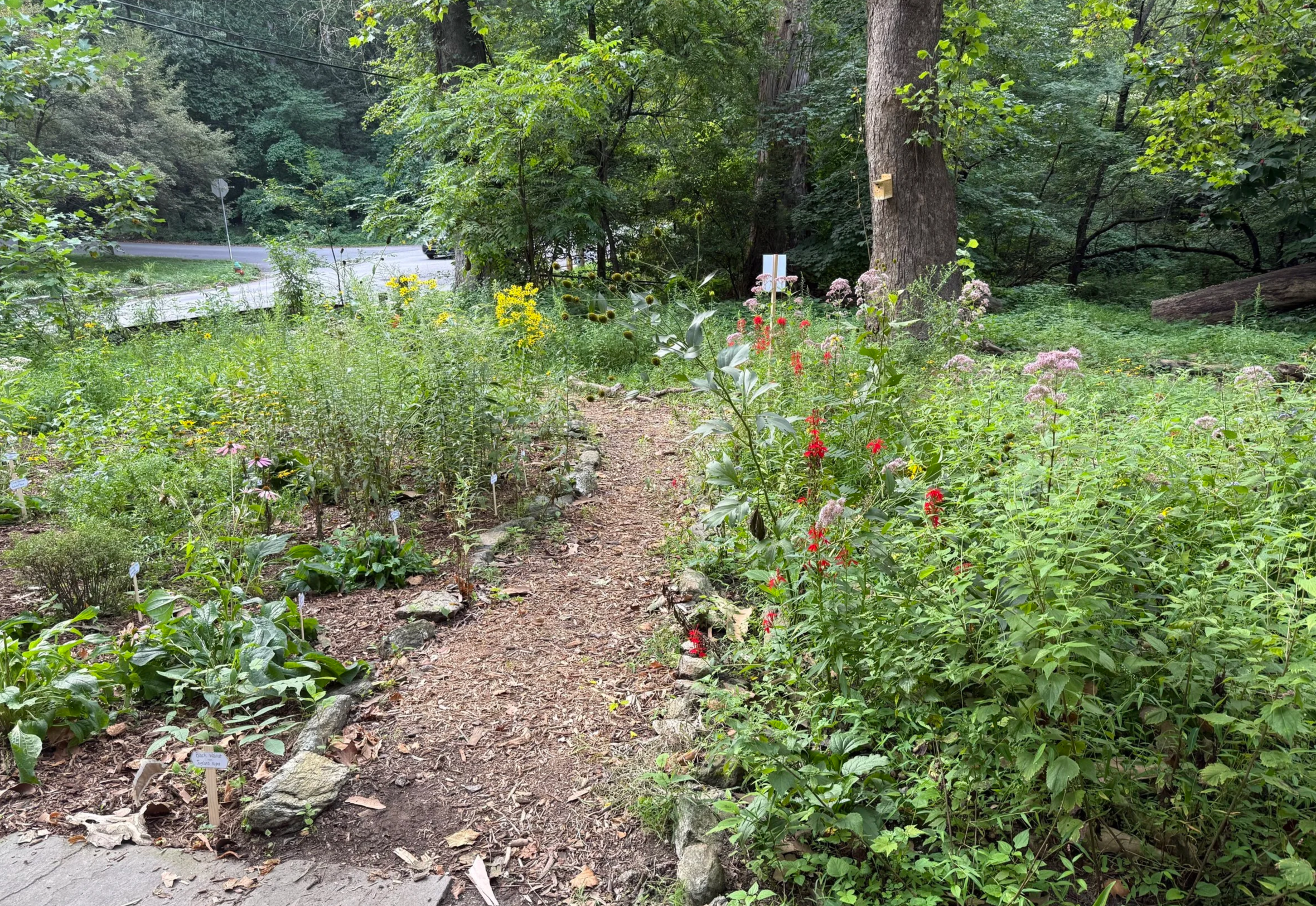
We started our meadow restoration project at Buttercup Cottage in summer of 2023. The ruins of Buttercup Cottage are located off of Emlen St. at the edge of the Cresheim woods section of Wissahickon Valley Park in north Mt. Airy. Visitors can access the ruin from the trail entrance at the intersection of Emlen Street and Cresheim Road. With permission from park friends group Friends of Wissahickon, we revitalized the nearly one acre open area around the ruins, transforming the site from a wasteland of invasive porcelain berry into a community nature oasis.
After the building was burned in the 1980s, the ruins have laid abandoned. They became a ground for spray painting, illegal trash dumping, and other ne'er-do-well activities, and the land around them became choked in invasive vines — particularly porcelain berry and Japanese stiltgrass.
So we set to work. The first summer we planted a few native wildflowers we had sprouted from seed. Little by little, we expanded our planted area into the wasteland of invasive plants. By spring 2024, restoring the entire site became a feasible reality. We took out spray paint cans, beer bottles, and other trash that had piled up inside the ruins and replanted it with a diverse collection of native wildflowers. The rest of that year we worked in front of the ruins and along the road, taking out invasive porcelain berry and replanting with native wildflowers, shrubs, and small trees to attract pollinators and birds and beautify the landscape.
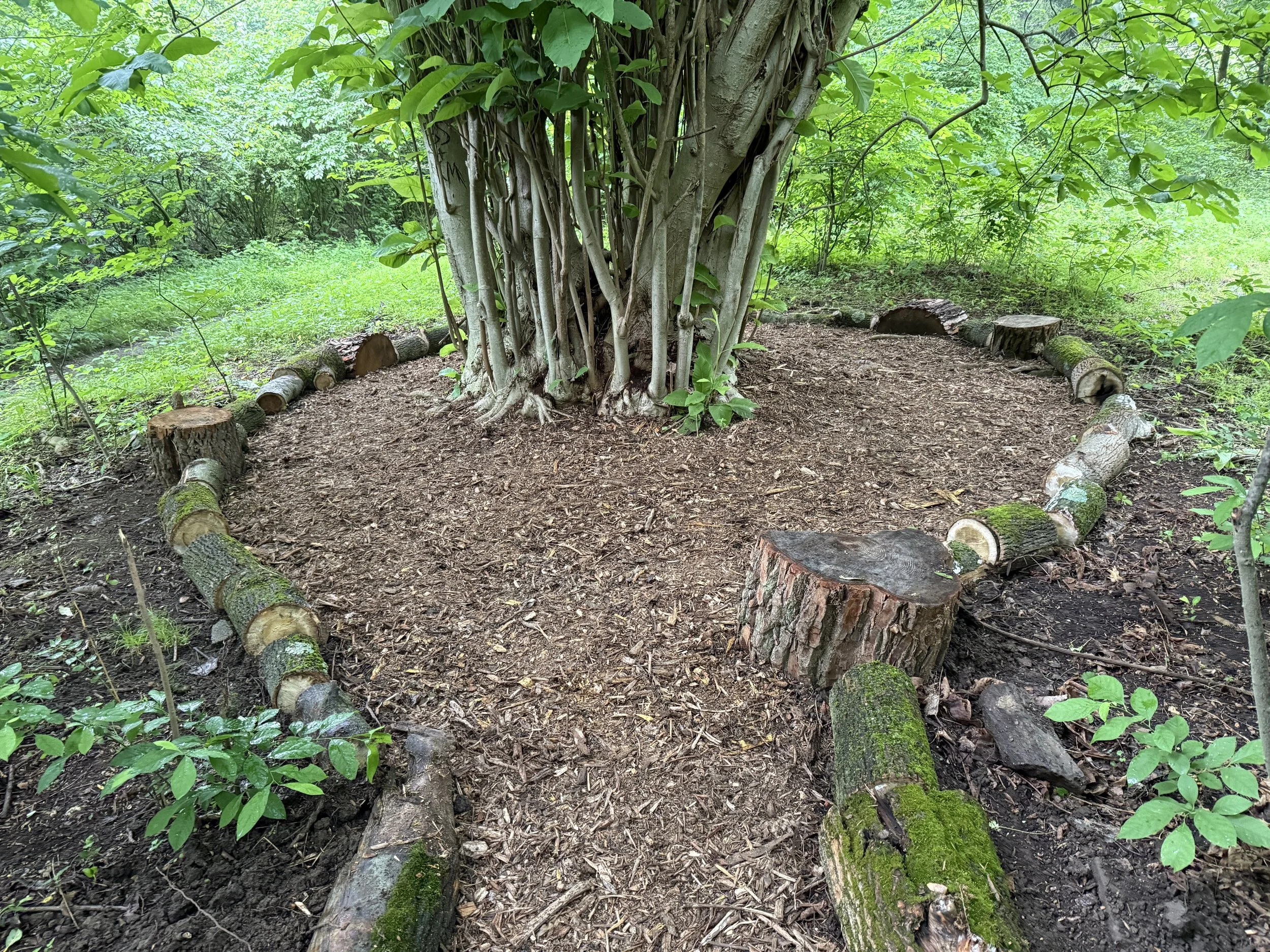
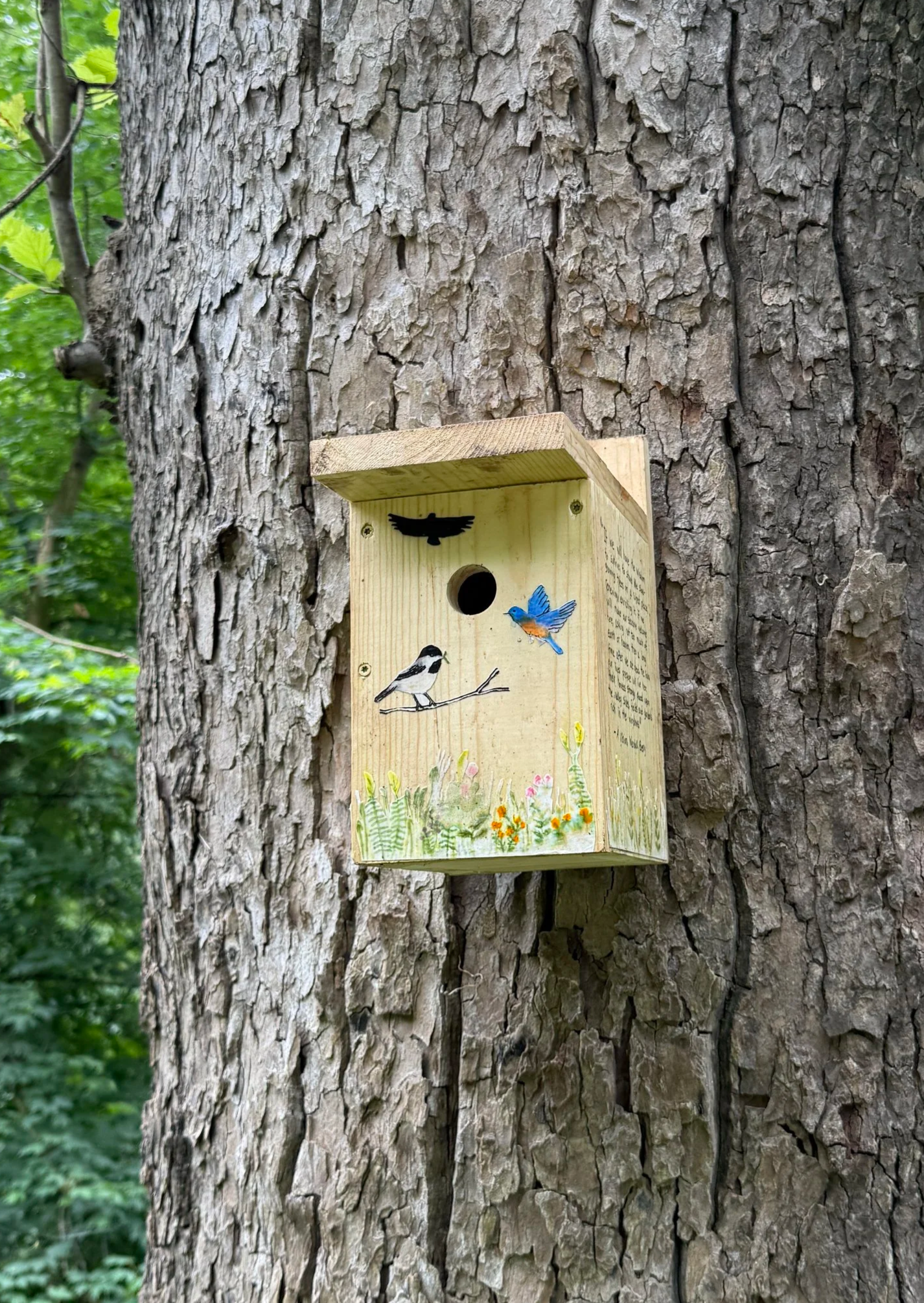
In 2025, we focused our attention on woodchipping and beautifying the existing trails, creating a stump circle for people to sit and enjoy the view, planting an educational garden of native medicinal plants, installing wildlife boxes and community art, and densifying our native meadows. This fall, we seeded the remaining open area in the back of the site with a collection of native grasses and flowers.
This winter, we are currently expanding into a new area left of our center trail by removing invasive vegetation and replanting with native trees and shrubs. We are also continuing to work on ongoing maintenance work and weeding of our existing pocket meadow and pollinator garden.
History of Buttercup Cottage
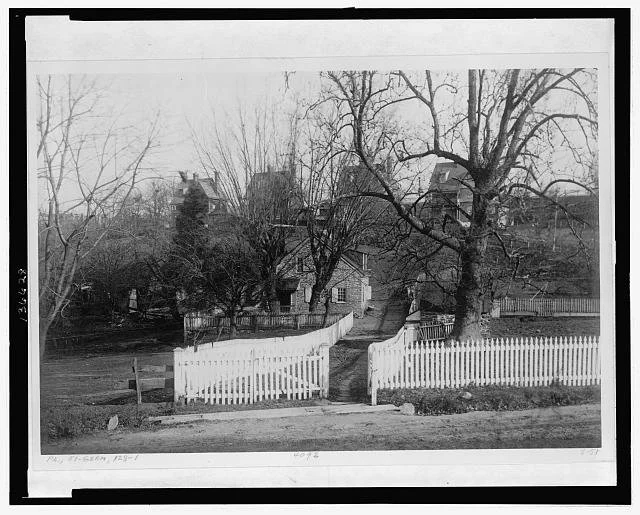
Buttercup Cottage was a 19th century farmhouse and barn. The building was built in the mid-1800s by wealthy landowner and developer Henry Houston. His vision was to provide a summer retreat for working-class women who worked in the polluted city. Working women could rent out one of the 16 rooms in the cottage for the price of one dollar a week. Adjacent to the cottage was a barn, cow pastures, an apple orchard, and a small tennis court. The program at Buttercup Cottage lasted many decades, beginning in 1889 and ending in the early 1940s. In the 1960s, the property was gifted to the Fairmount Park Commission and became part of Wissahickon Valley Park. Not long after, the main building was demolished, but the barn remained standing and became used for park events. Most of the surrounding open land succeeded into natural forest. In 1982, the barn suffered a fire, likely the result of arson. Since then, the remaining open area has lain abandoned until our revitalization efforts in the last couple years. The stone structure of the barn is all that remains of Buttercup Cottage today.
For more information on the history of this interesting place, go to https://fow.org/virtual-valley/trails-to-the-past/buttercup-cottage/.
1920 photograph of Buttercup Cottage
Our habitats: front meadow
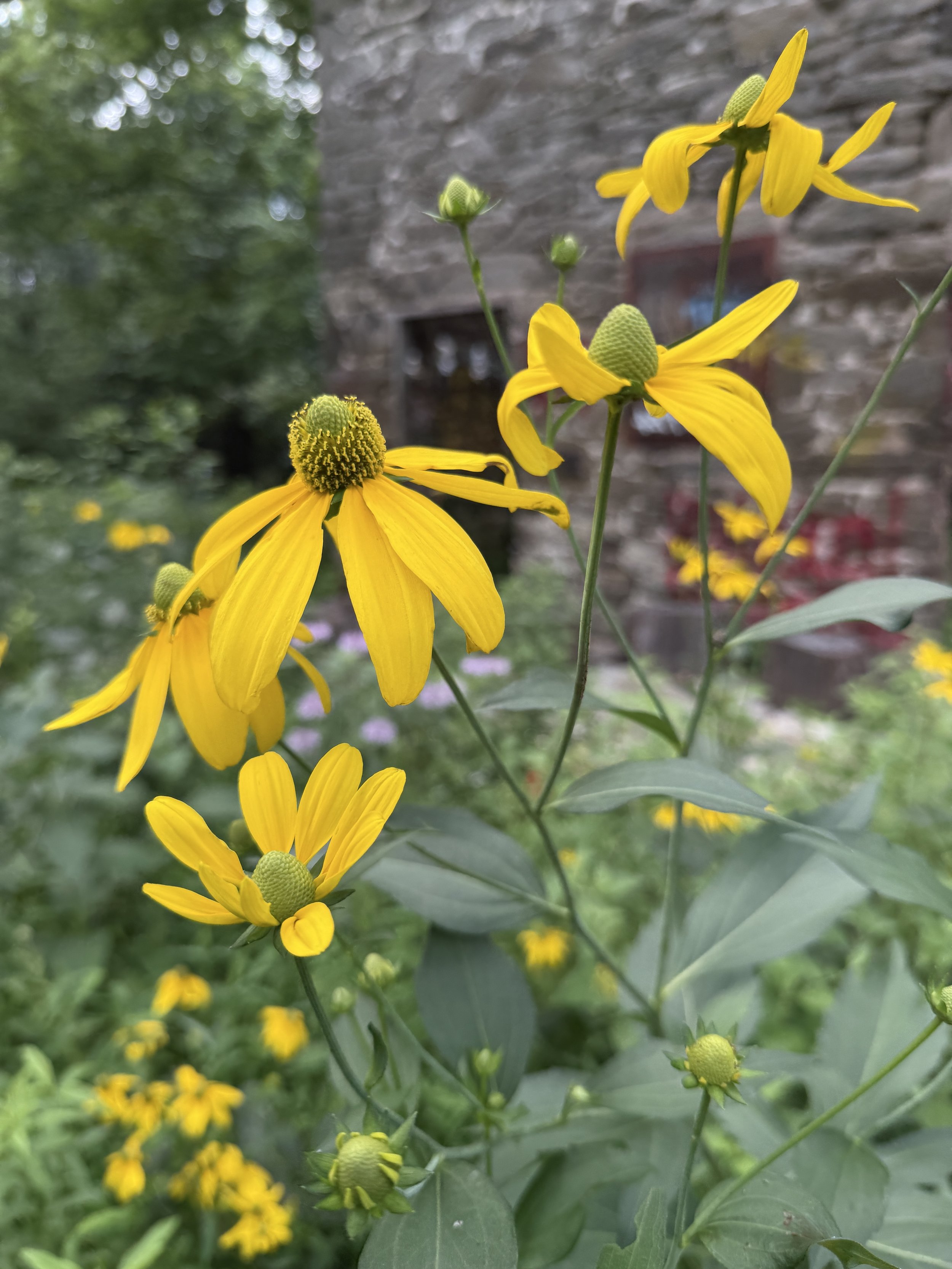
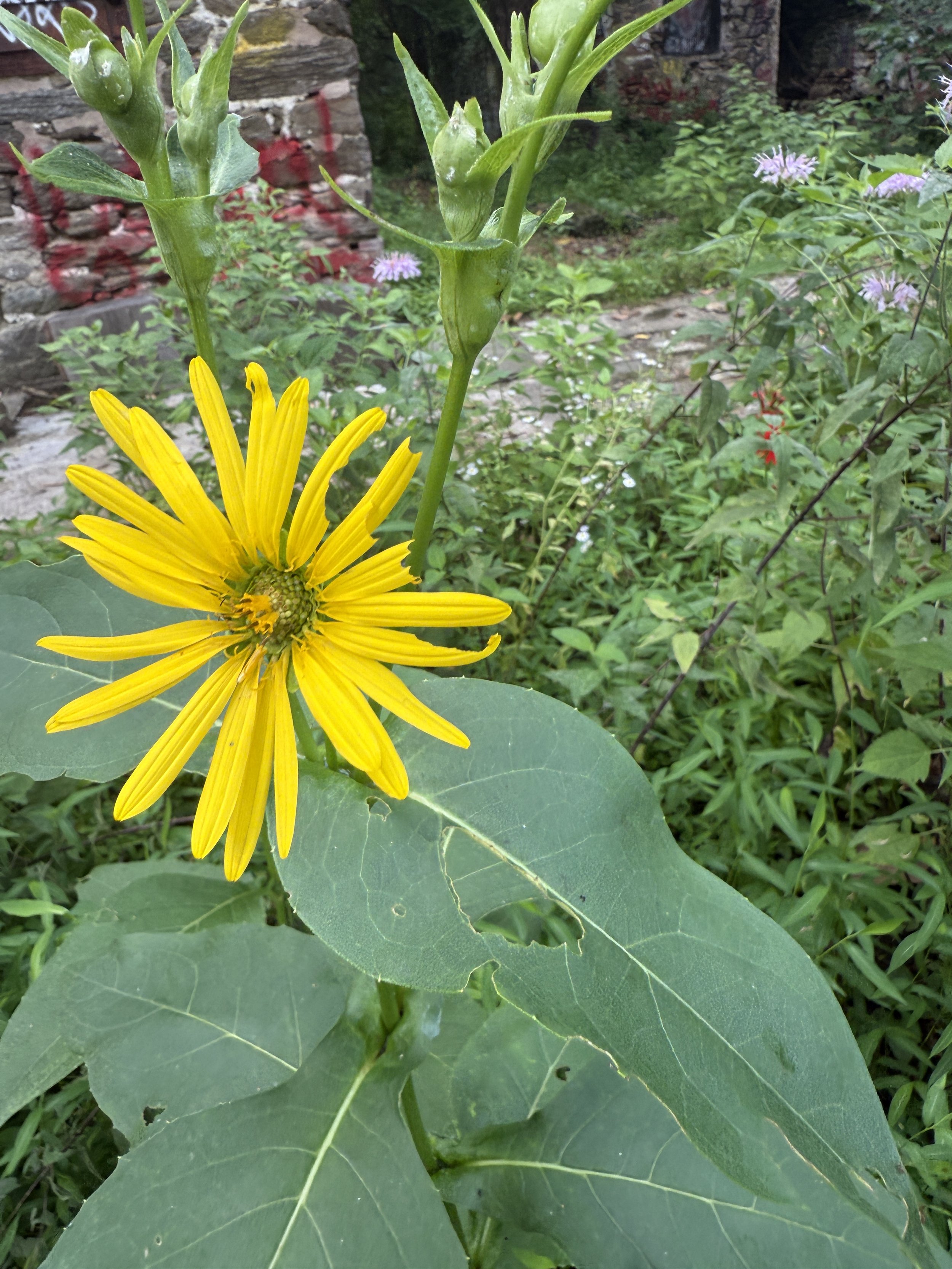
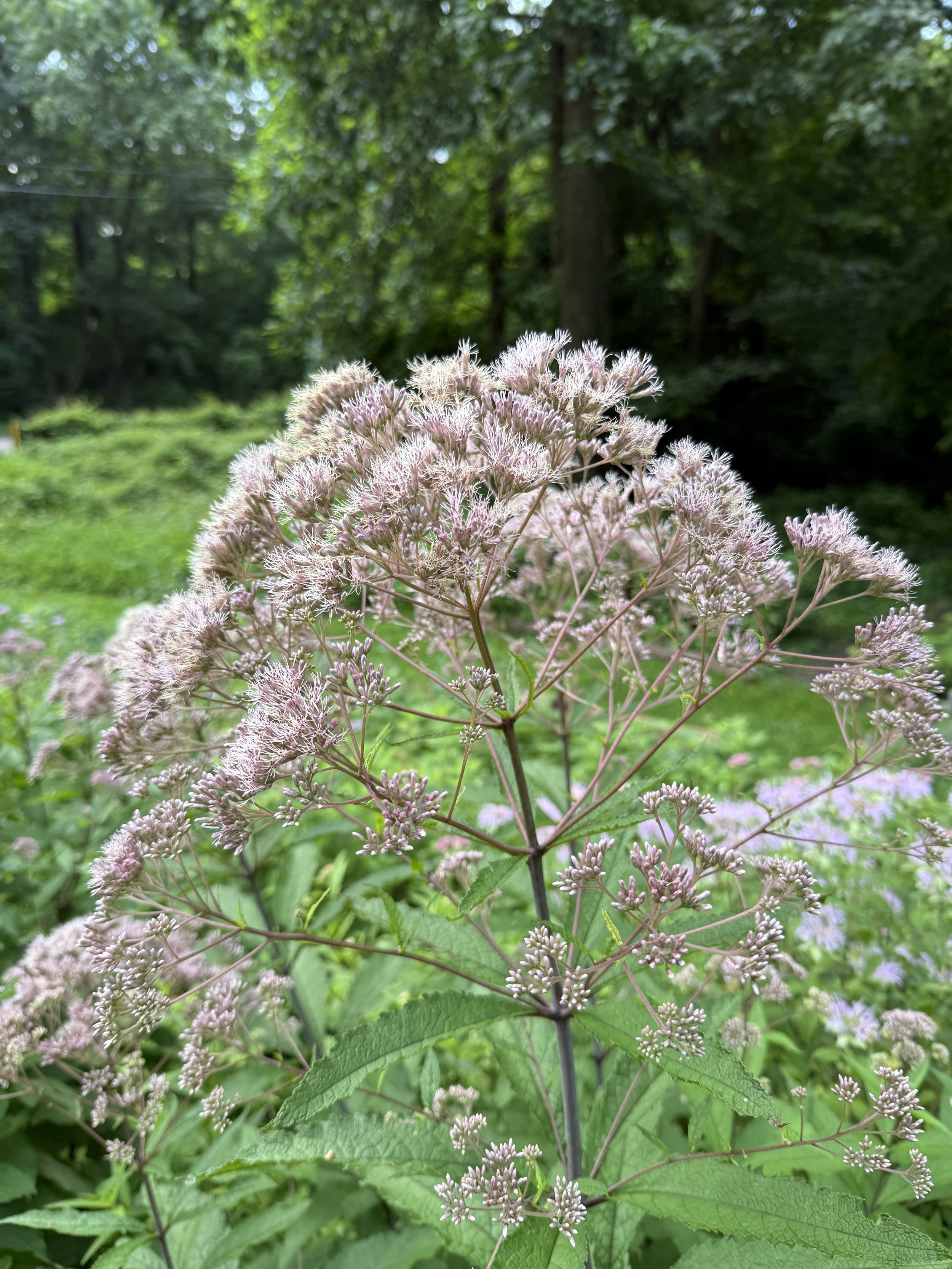
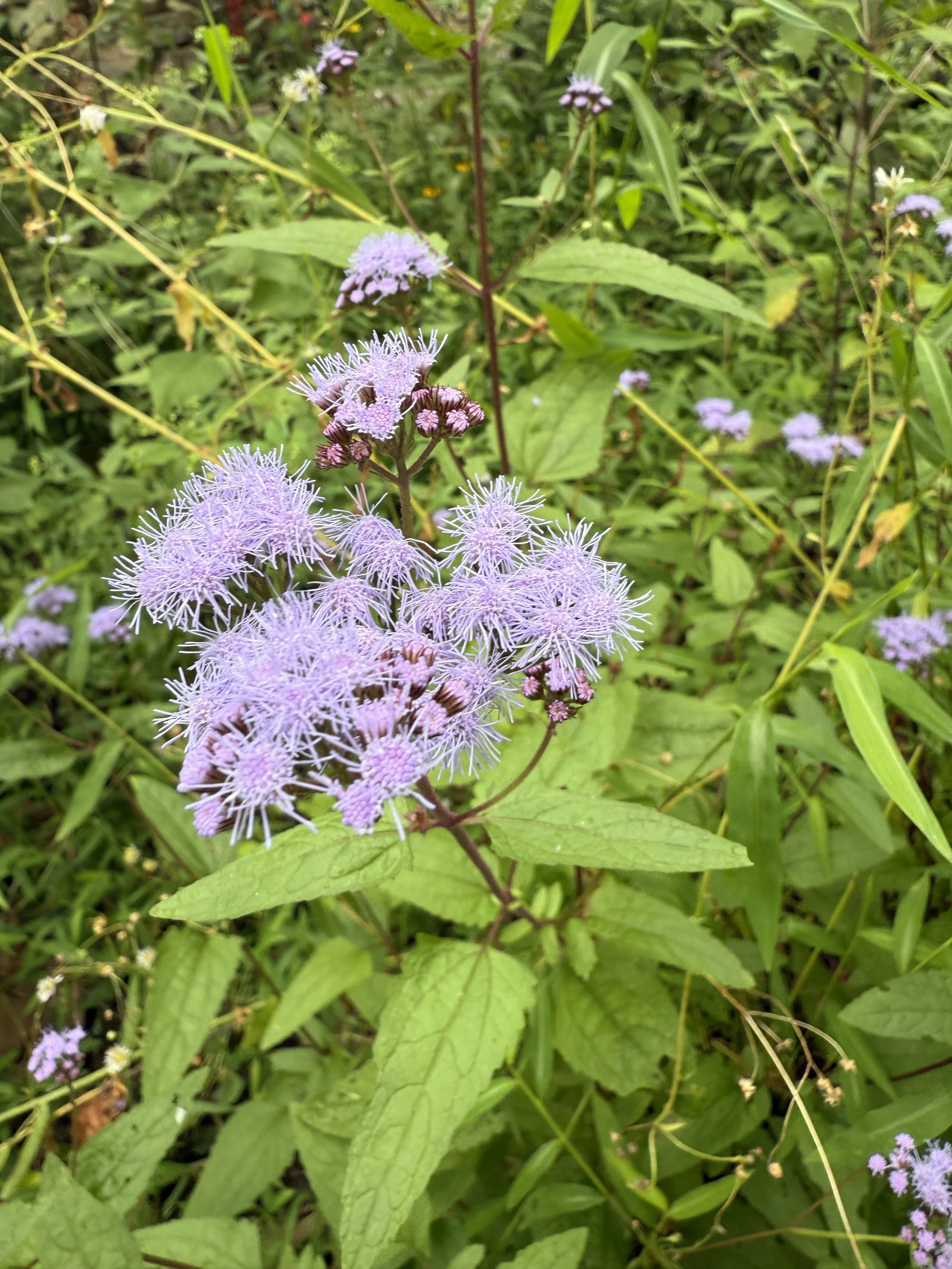
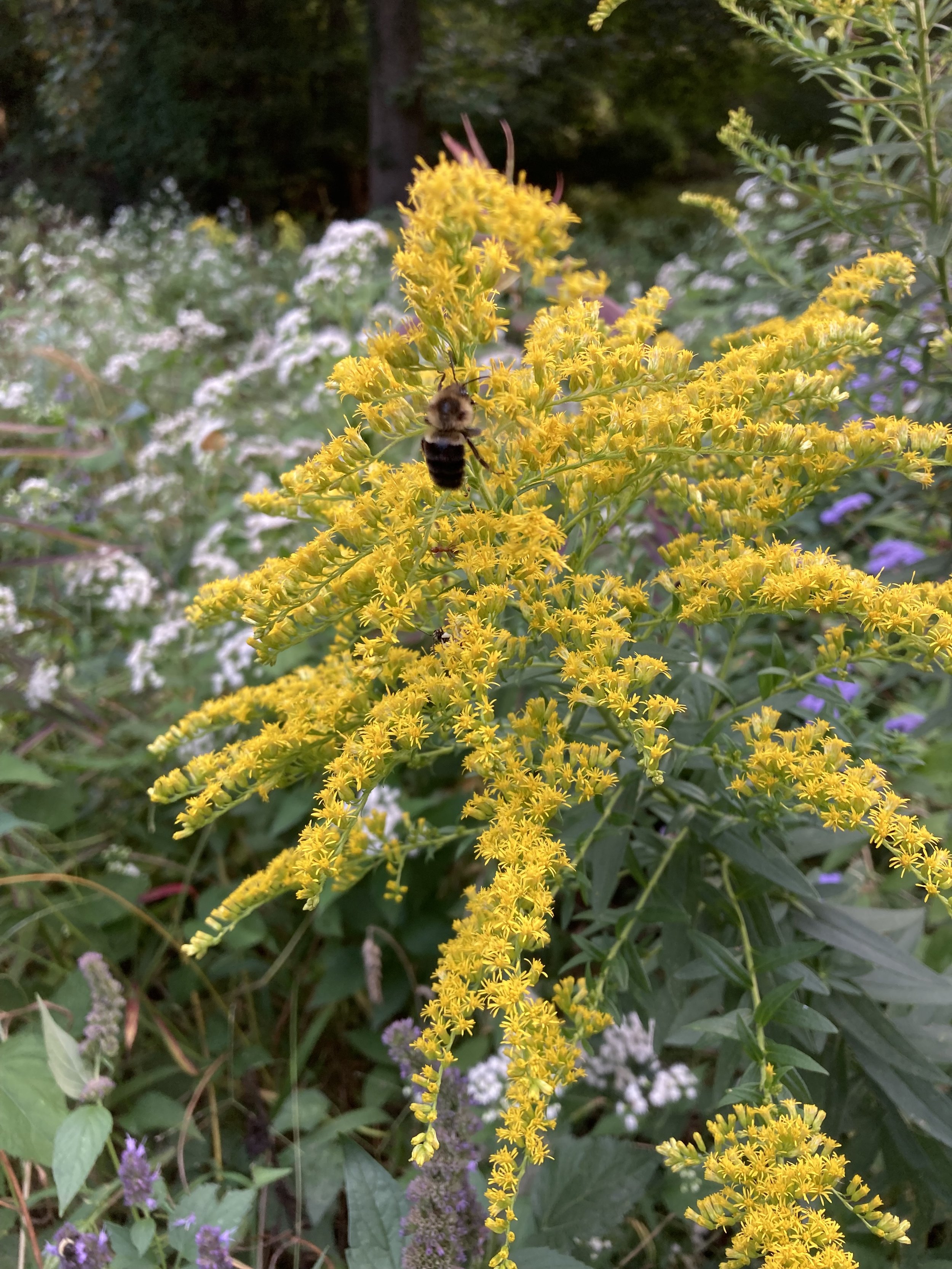
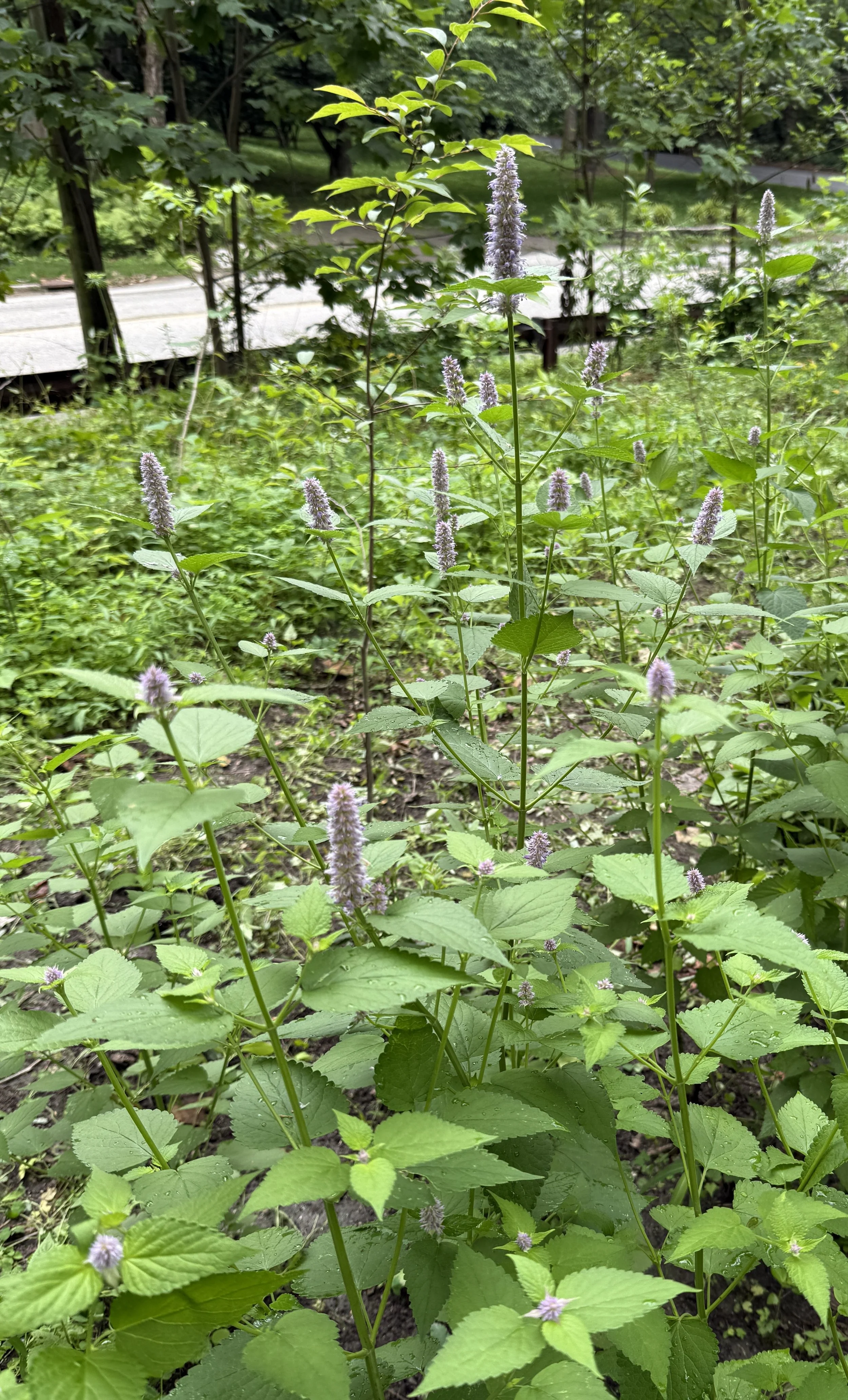
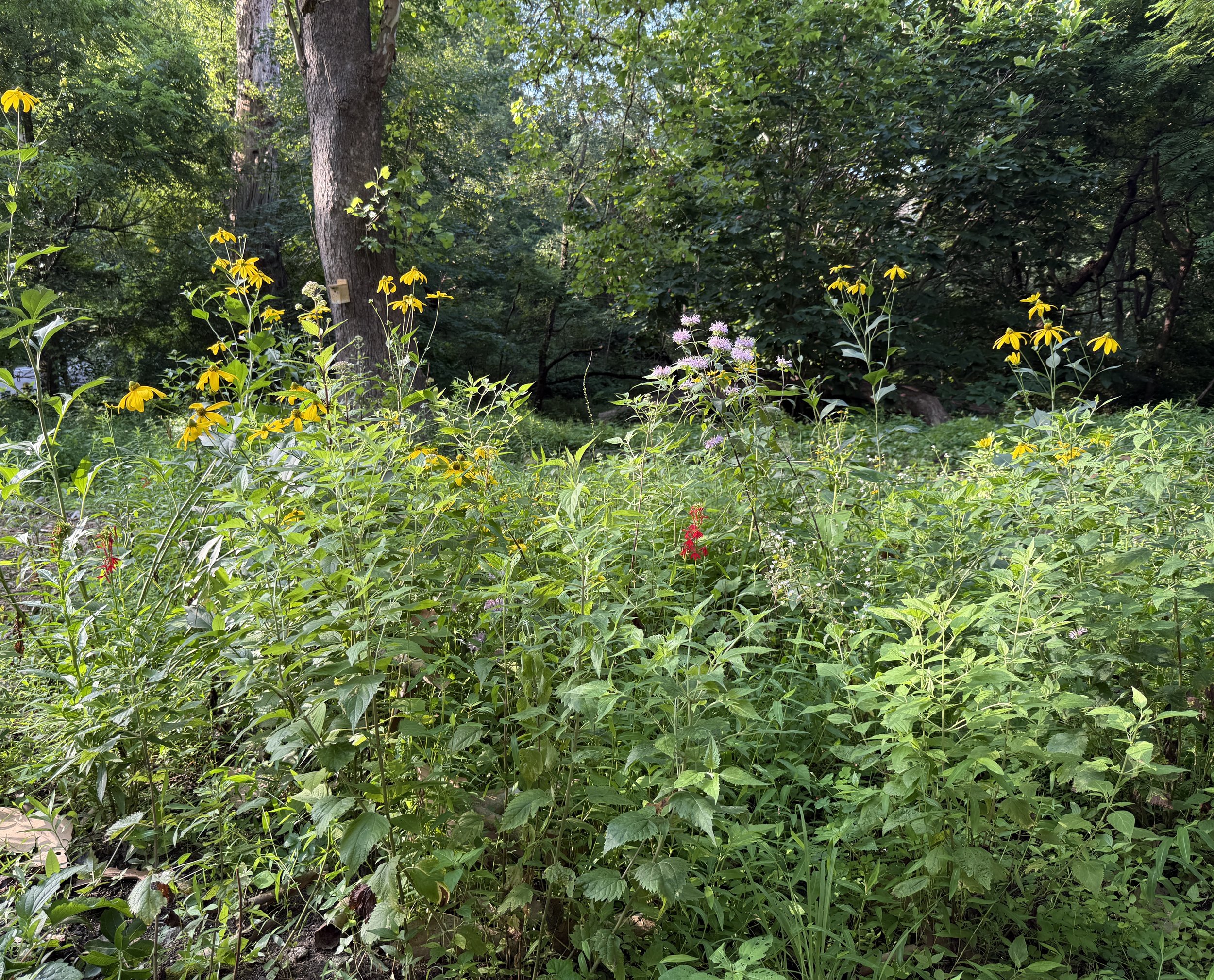
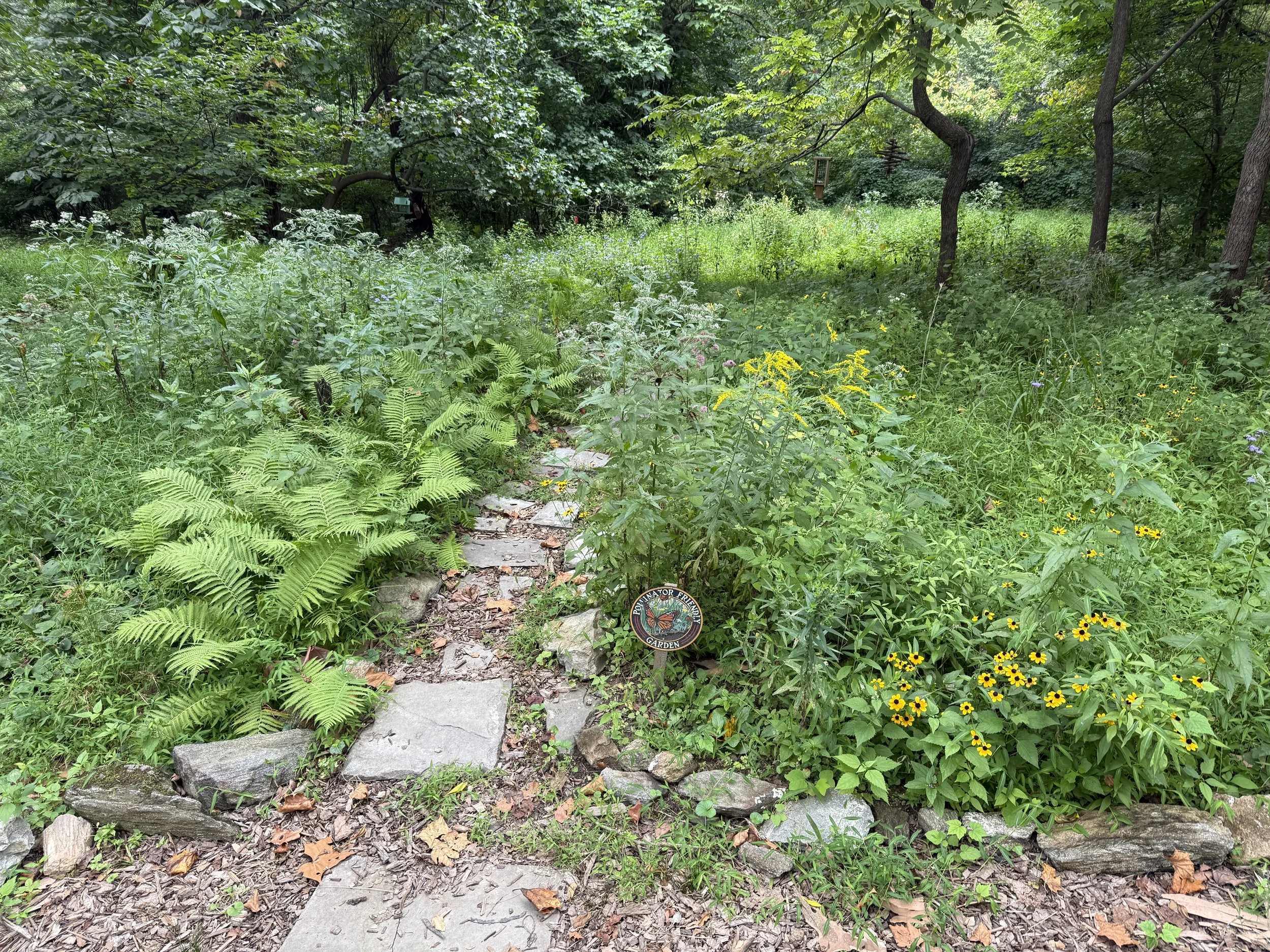
At Buttercup Cottage, we work to foster a diversity of microhabitats to benefit nature, wildlife, and people. In the front of the area along Emlen St. continuing back towards the ruin we have planted a pocket meadow with native wildflowers. Some of the flowers in our pocket meadow include cutleaf coneflower, joe-pye weed, black-eyed susan, blue mistflower, wrinkleleaf goldenrod, and New England aster. On the right side of the trail leading up to the ruin, we recently added a small educational garden of native medicinal plants, which are highlighted by informative species tags. These plants were used by the Lenape and other Indigenous peoples for medicinal purposes. Further back towards the road from our meadow, we are currently planting a hedgerow of native trees and shrubs to block out the sounds of the road.
Inside the barn
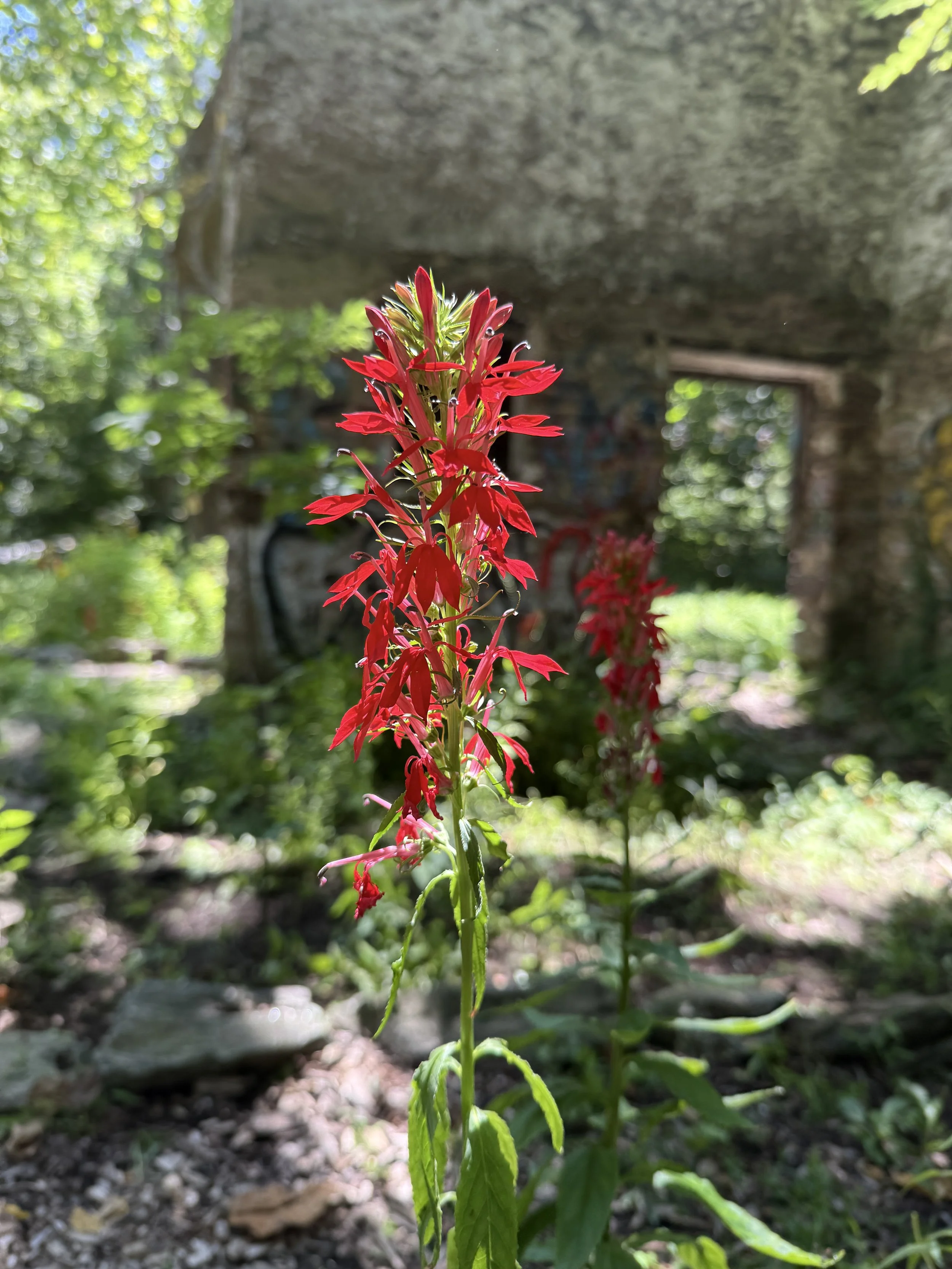
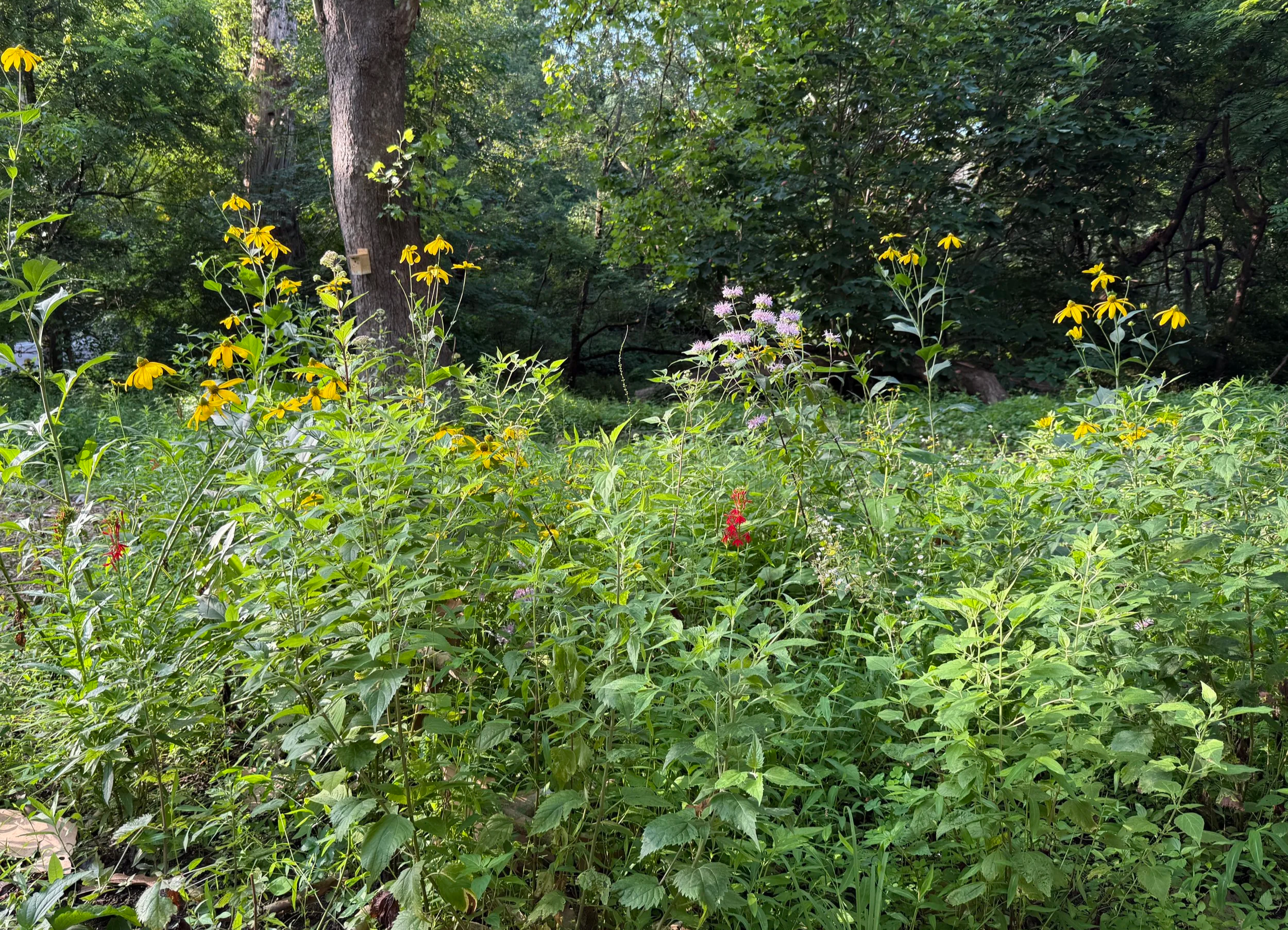
The large open room inside the former barn is planted more like a garden rather than a wild meadow, with several garden beds bordered with large Wissahickon schist stones. In the center of the ruin, Noah and Nate Raven planted Brother’s Oak, a pin oak sapling that stands as a tribute to collaboration in the City of Brotherly Love. Cardinal flower, blue mistflower, Canada goldenrod, path rush, virginia creeper, and spicebush are some of the many native plants we have planted inside the barn. In addition to the plantings, we’ve also installed a row of stumps to provide sitting areas for this incredible space.
Woodland garden
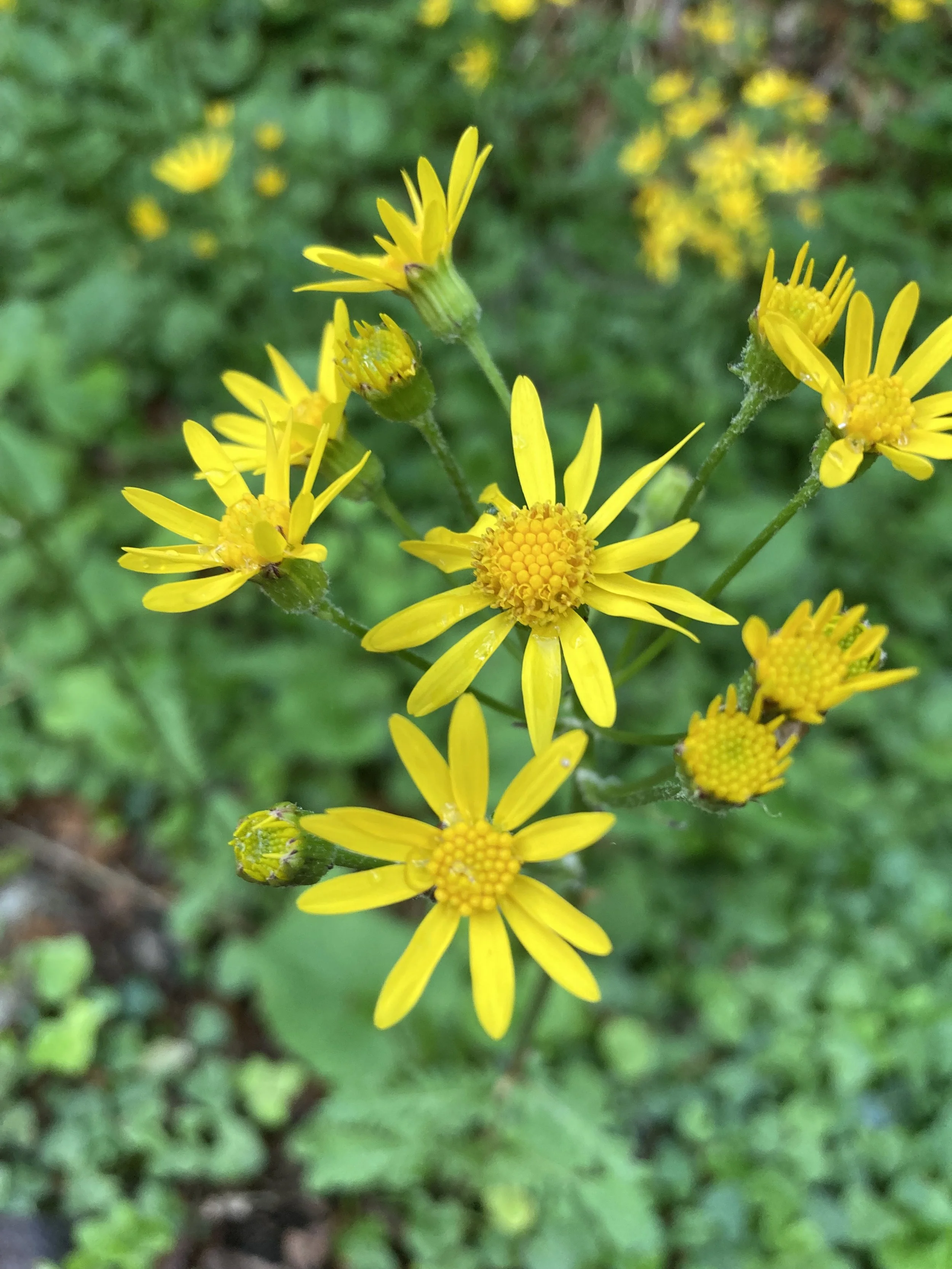
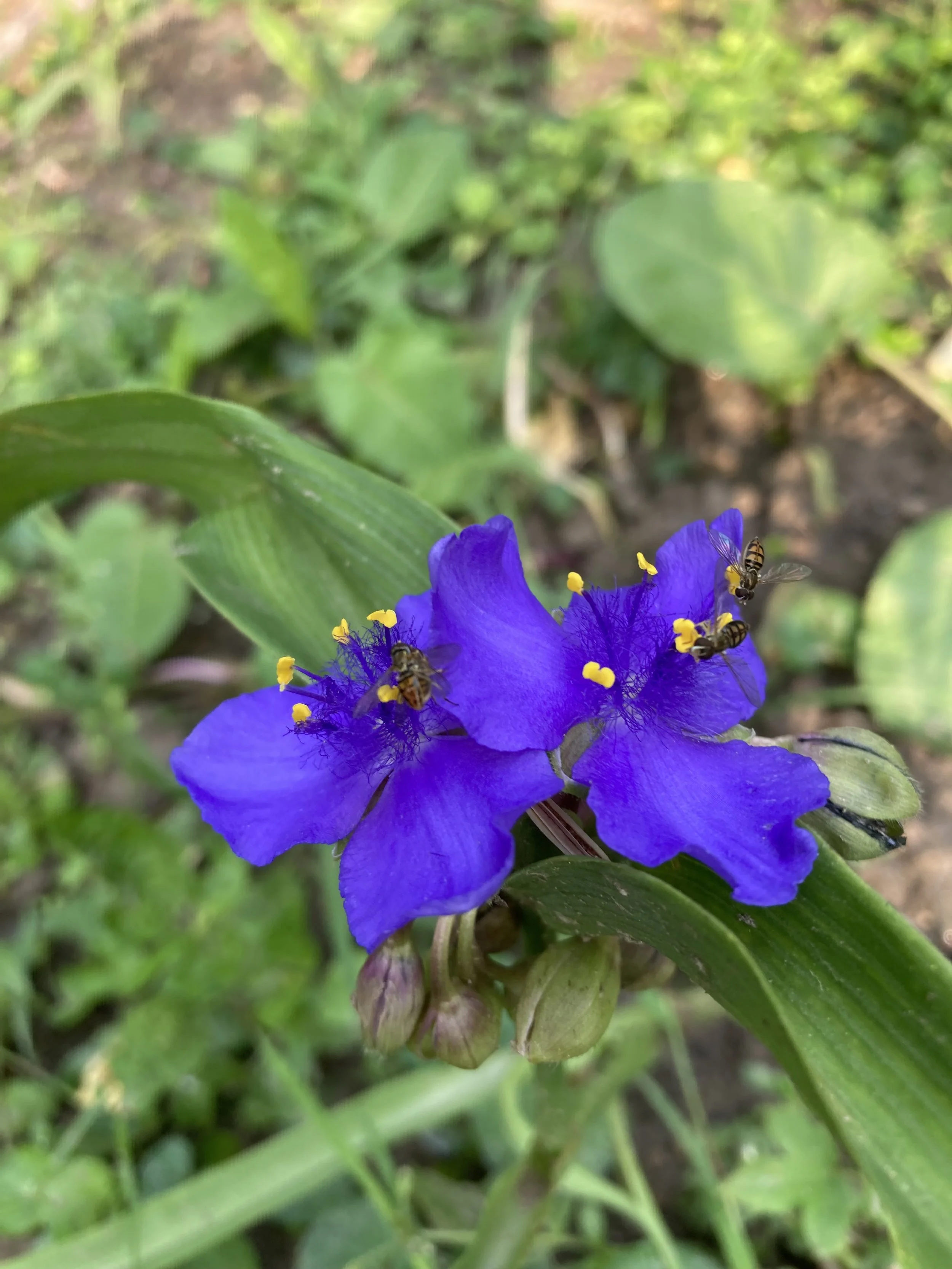
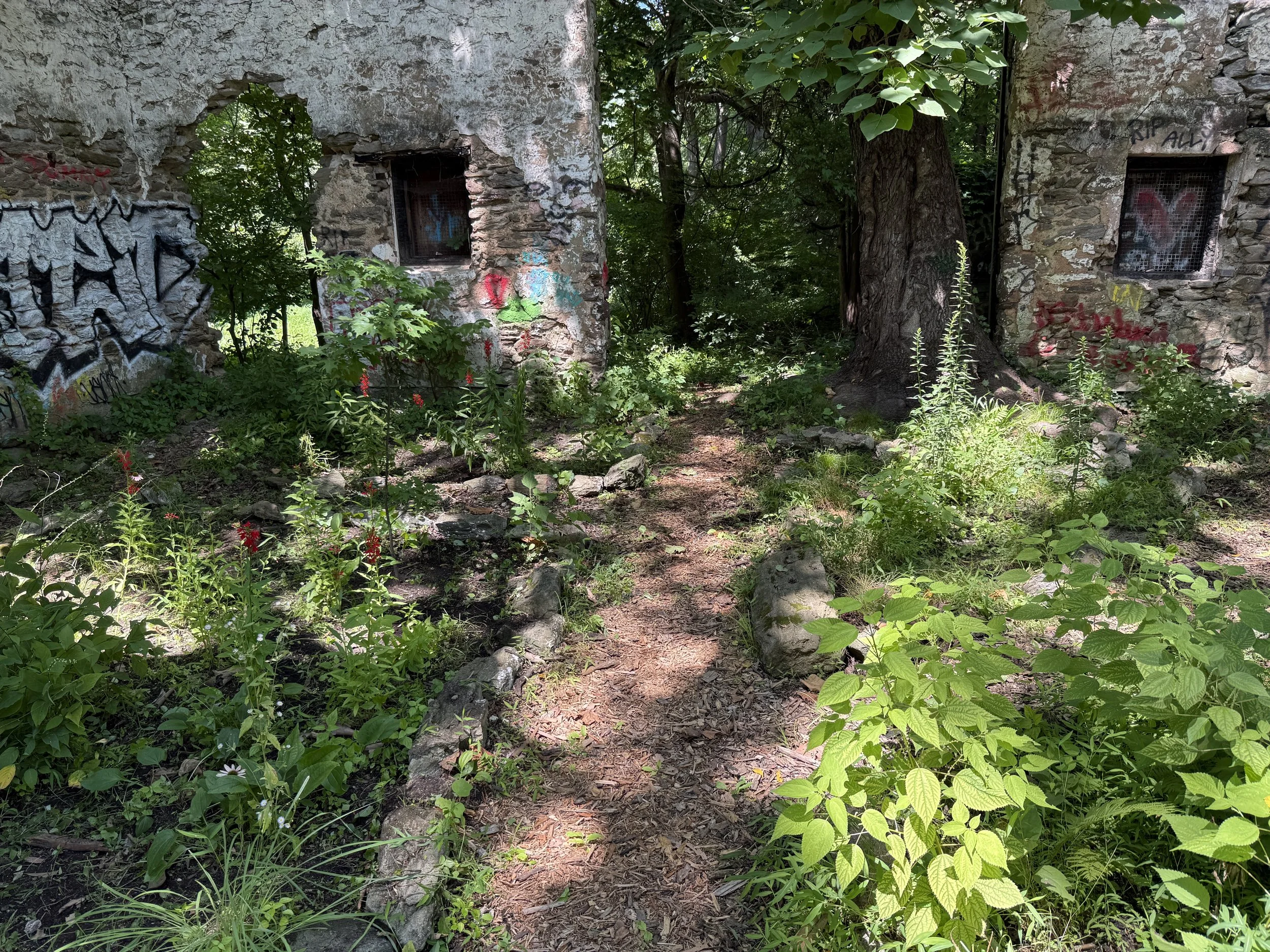
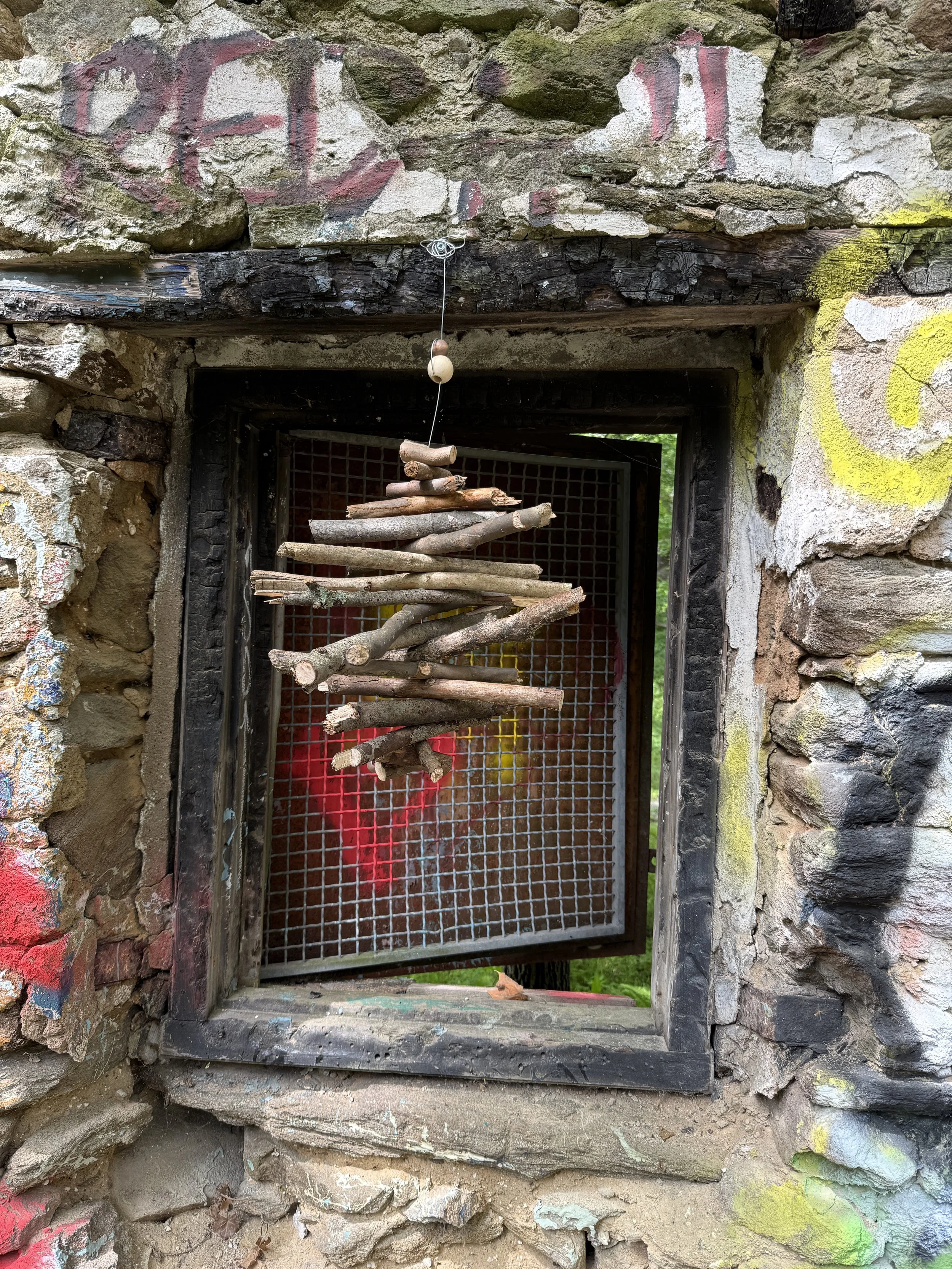
Left of the ruin and towards the back of the site is an open woodland garden that follows the center path paved with flat stones and woodchips. The microwoodland habitat has been planted with a collection of part shade plants, including ostrich fern, golden ragwort, boneset, spiderwort, brown-eyed susan, and snakeroot. We have installed several birdfeeders and birdhouses, including a suet feeder to attract woodpeckers. You also may notice some of the community art along the path, including our handmade wood mobiles, DIY windchimes, and a row of dangling pinecones. Following the center path through the site, you will reach a children’s nature playspace around an old umbrella magnolia tree. The tree is circled by many stumps to sit, play, and crawl on — plus, you can even walk through the tree and look up at its beautiful canopy! The path then continues into the surrounding forest towards Cresheim Creek.
Plants & Wildlife
We currently have planted and foster over 80 species of native plants in the area surrounding Buttercup Cottage, from coneflowers and goldenrods to sycamores and spicebush. Some plant highlights are the group of three old-growth American sycamore trees near the trail entrance to our vibrant patch of cutleaf coneflower, which blooms in late summer.
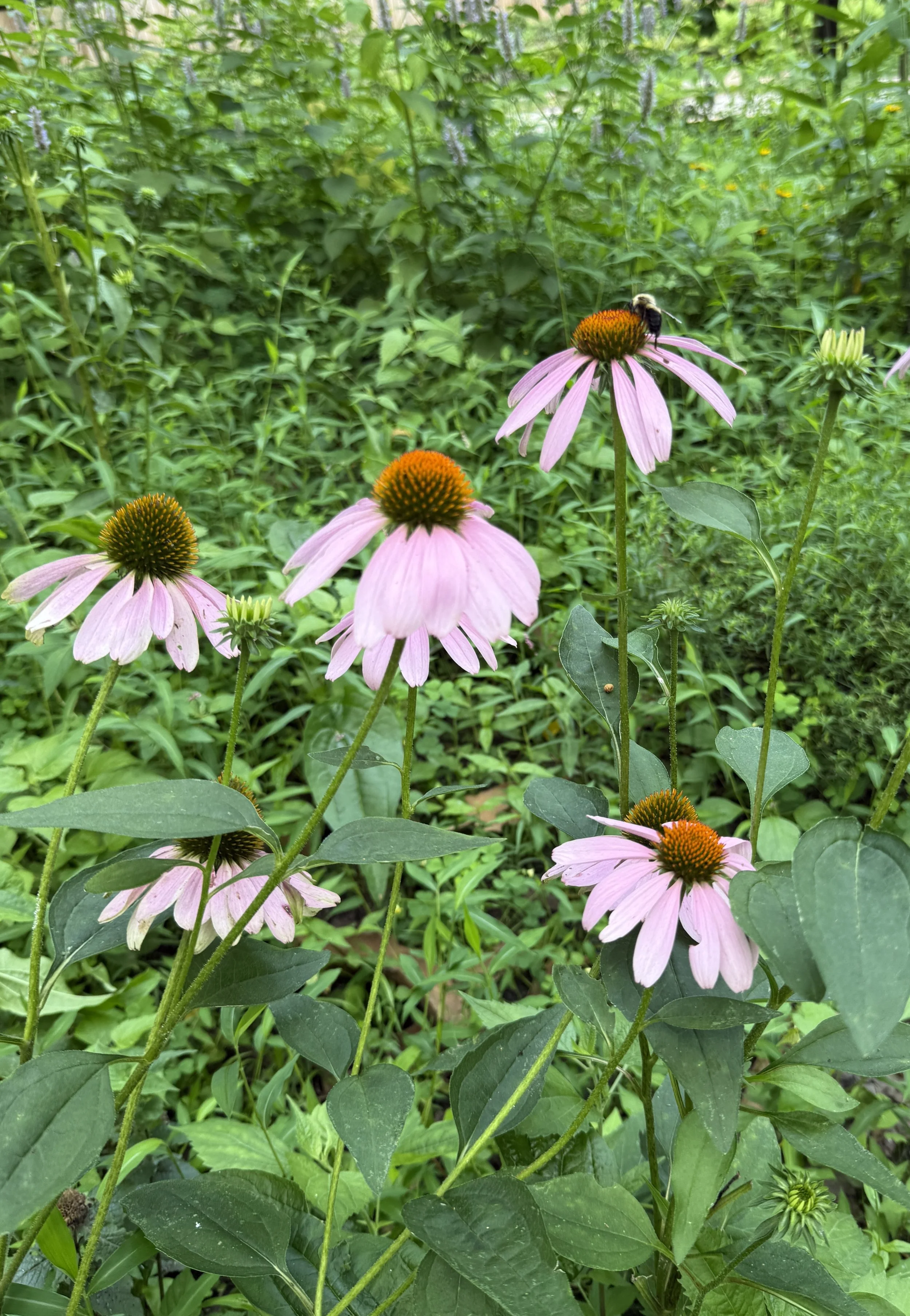
We have also had incredible success at bringing back pollinators and wildlife to Buttercup Cottage. Our native plantings have attracted seven species of butterflies (including monarchs), multiple species of native bees, six of our native mammals, and nearly 40 species of birds, from ruby-throated hummingbirds and American goldfinches to pileated woodpeckers, chickadees, warblers, and rare scarlet tanagers. For a complete list of the plants and wildlife at Buttercup Cottage, click on the links below:
Selection of blooms
Click through to see what is in bloom at Buttercup Cottage!